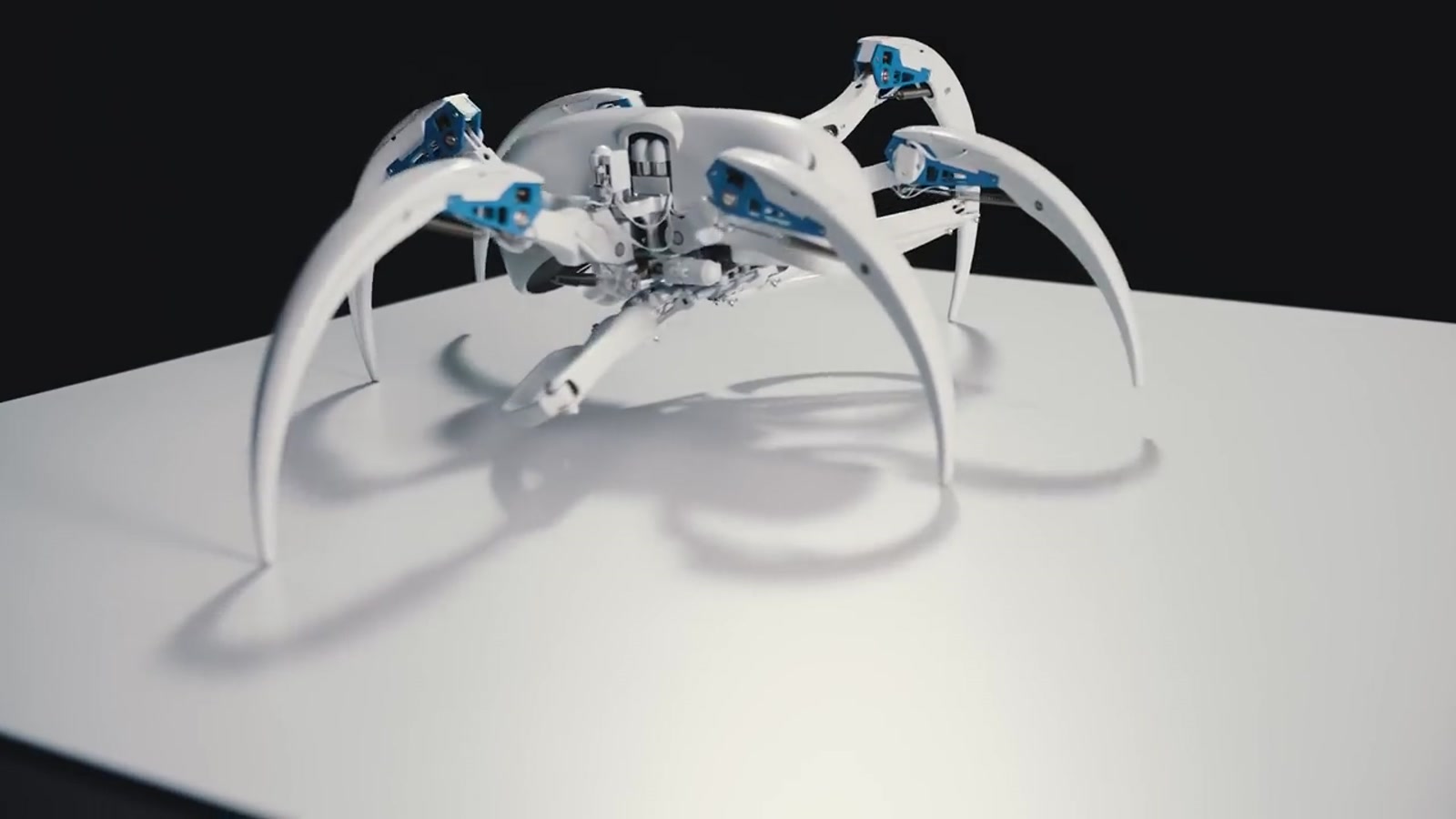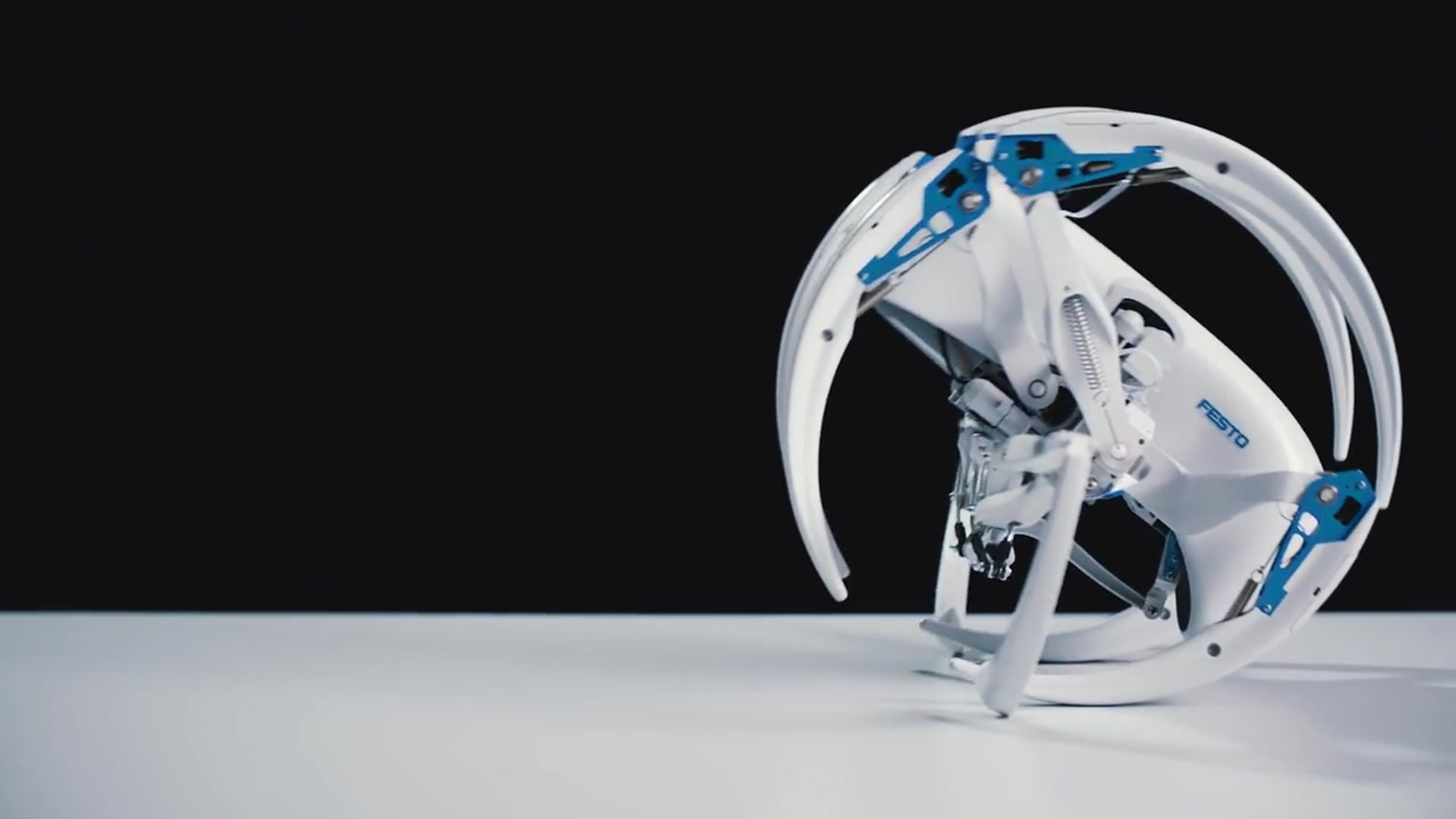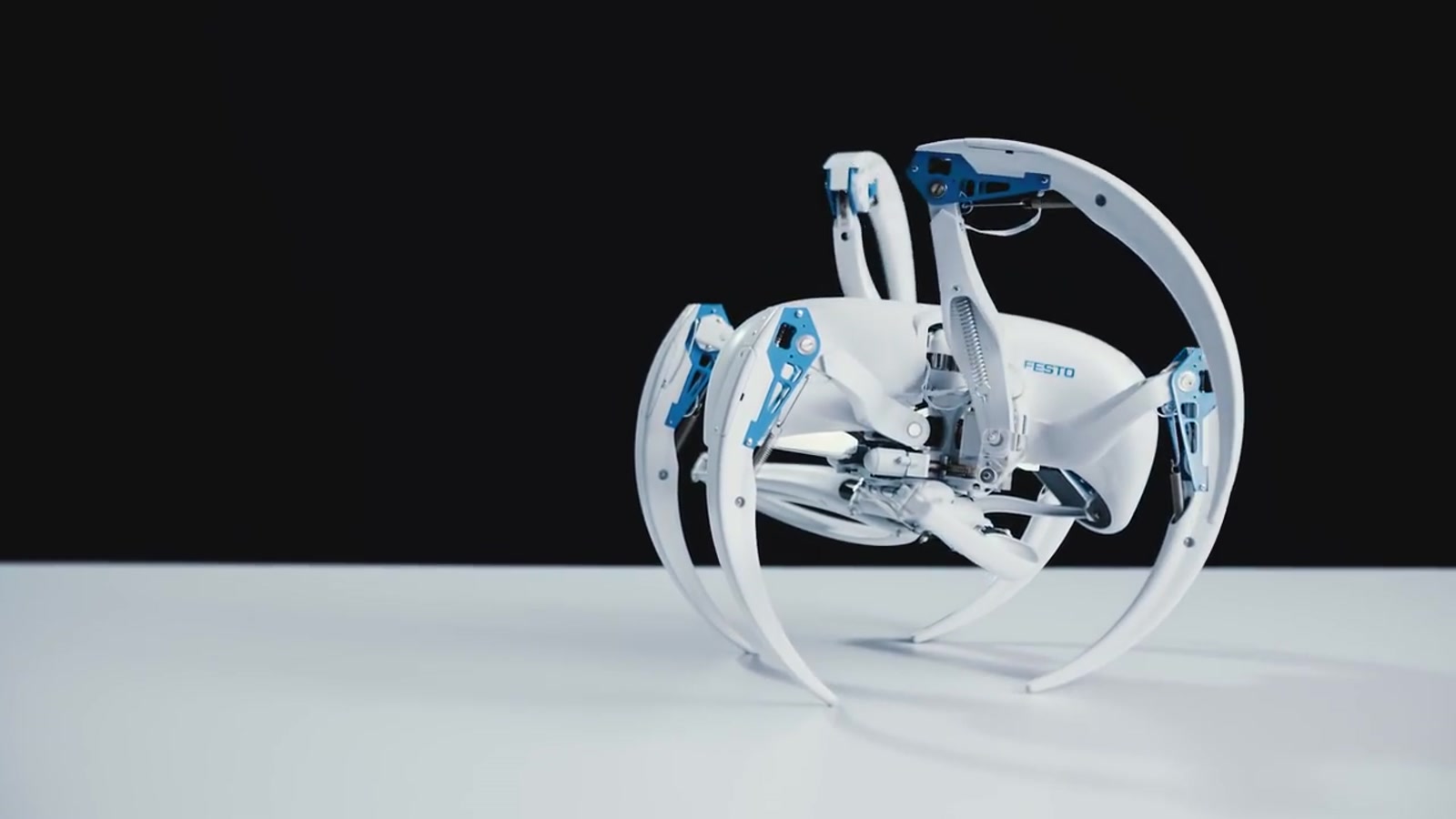
The robot does not need a separate set of wheels. Its legs curl into their circular outline, while a remaining pair reaches towards the floor and pushes the whole body into motion.
Festo presented the BionicWheelBot in 2018 as part of its Bionic Learning Network. The research project took its cue from the cartwheeling spider, Cebrennus rechenbergi, which can move by walking and by rolling. Professor Ingo Rechenberg worked with Festo’s bionics team on the robot’s kinematics and drive concept.
The push comes from another pair of legs
The change is more specific than simply curling into a ball. Festo describes three legs on each side bending to form two wheel-like structures. Two other legs, folded away during walking, extend to push the body off the ground and keep supplying the next impulse as it rolls.
The original demonstration gives that explanation a physical form. Limbs that look like supports become part of a circular outline, while the remaining pair becomes the means of propulsion. When the arrangement opens again, the machine returns to a recognisably legged shape.
It is a useful design question made unusually legible: what happens when the same parts have to serve different kinds of motion? Here the answer is in the sequence of folding, positioning and pushing, rather than in adding another mechanism alongside the first.
A research idea from 2018
The project is an experimental robot, not a statement that this particular machine has become a general-purpose product. Our edit draws on Festo’s official 2018 film and concentrates on the visible change between its two movement modes. It preserves the manufacturer’s source credit and keeps enough of the robot in frame to follow how the legs are arranged.
People & sources
BionicWheelBot research robot and original demonstration film: Festo, 2018. Kinematics and drive development with Professor Ingo Rechenberg and the TU Berlin team. Original English narration and editorial: HurolHaber.
A closer look