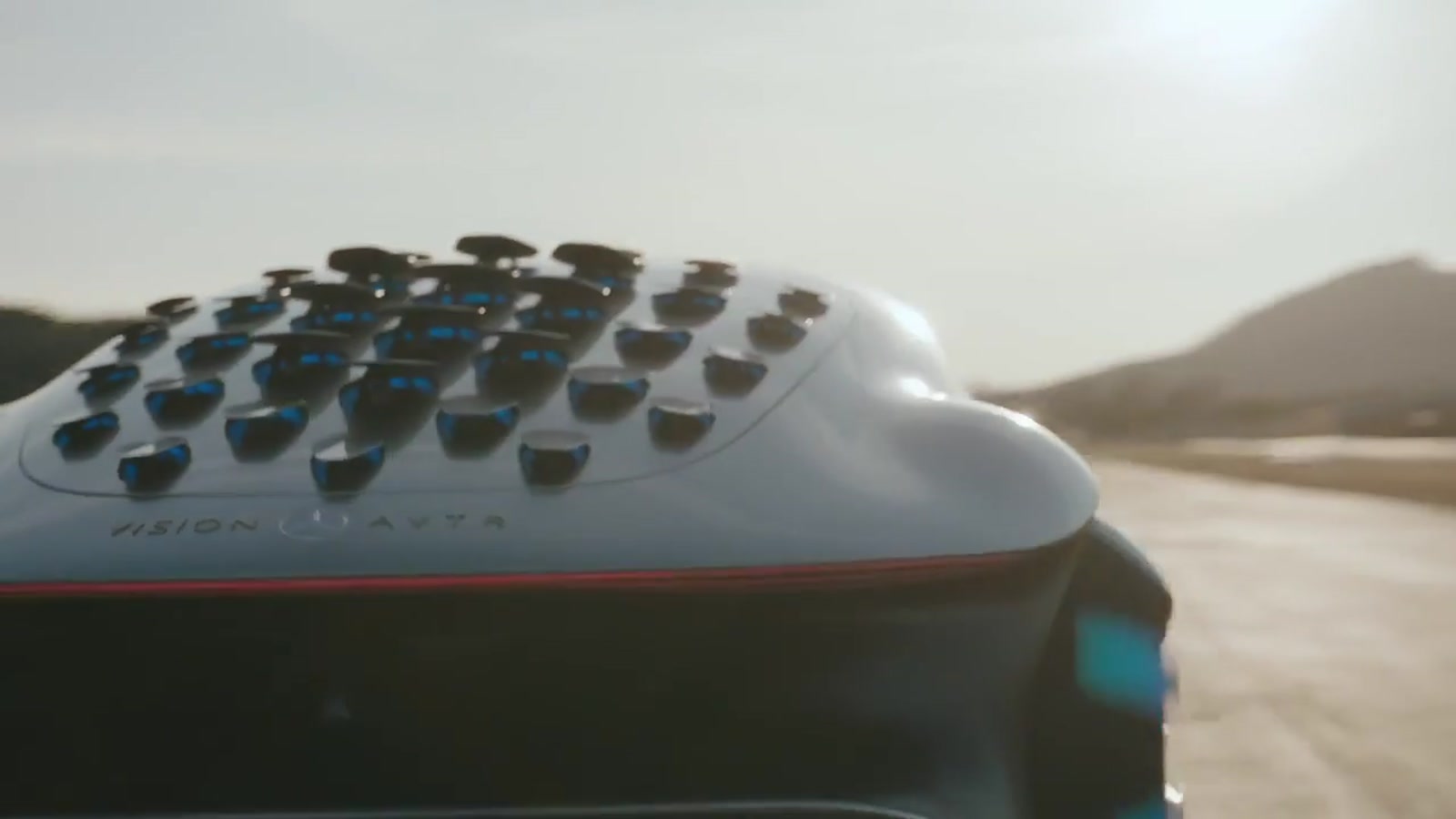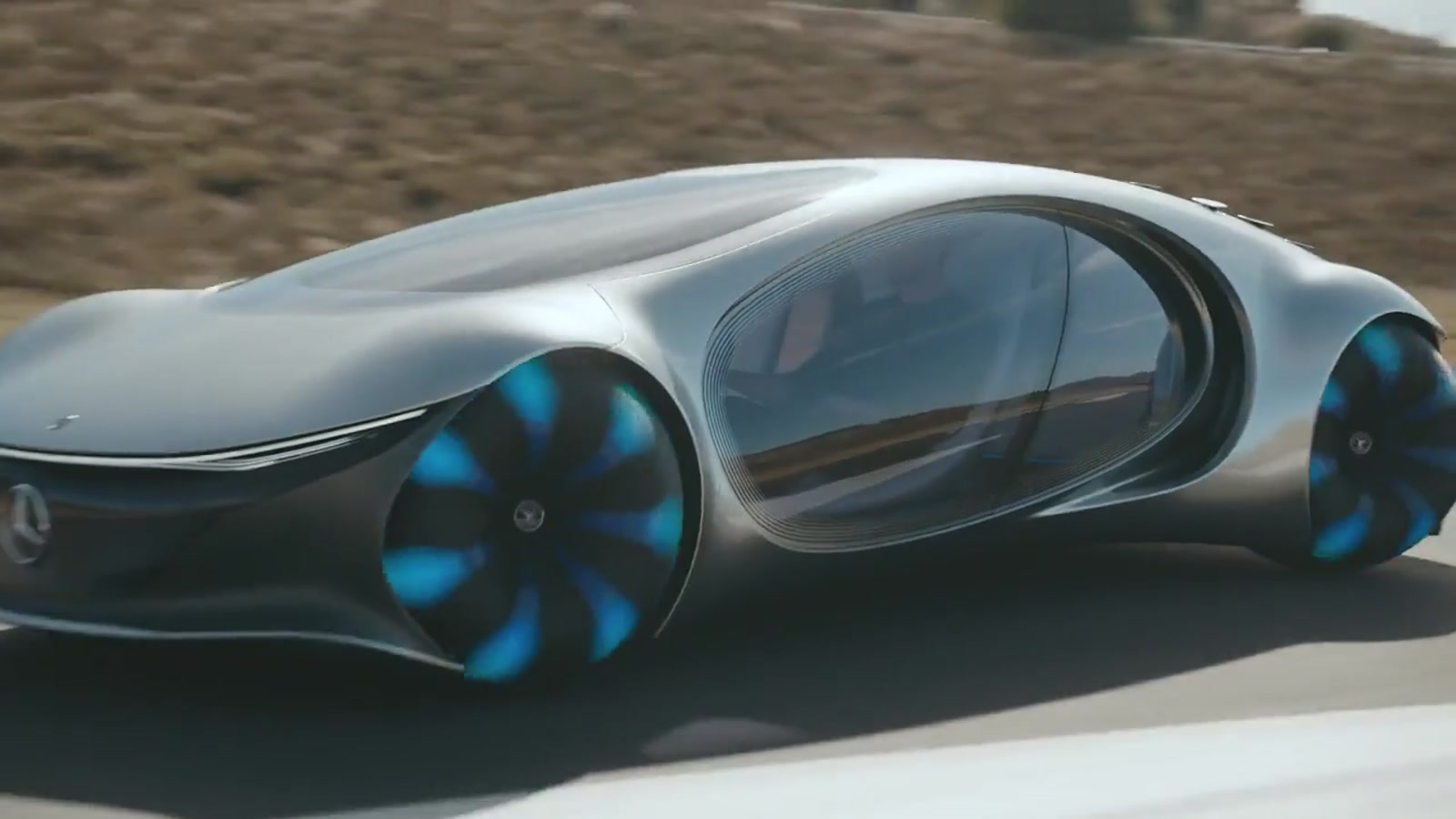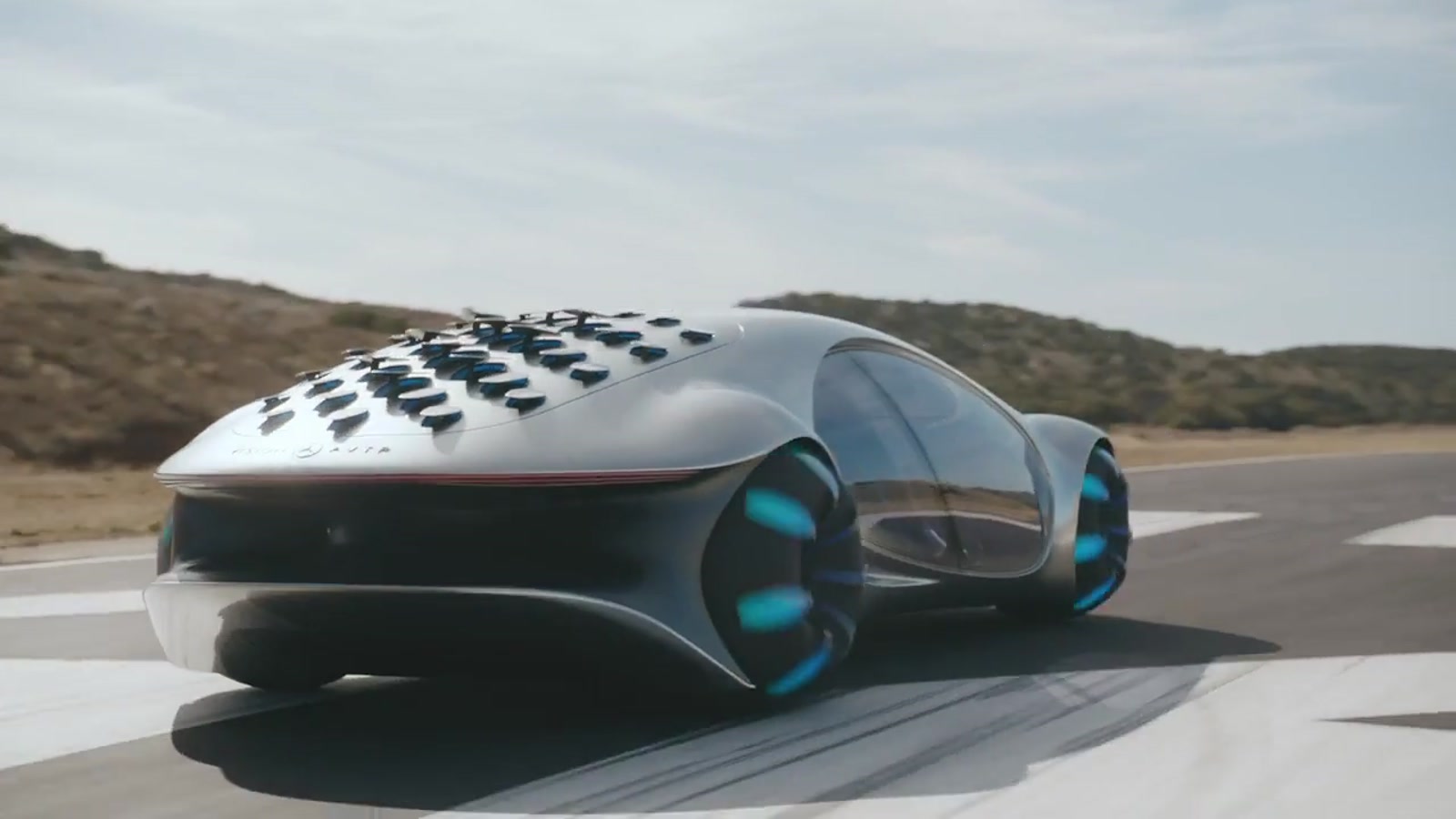
The most expressive part of this Mercedes is behind the passengers. Small panels across its back lift and tilt, breaking the smooth body into a moving field of scales. A car usually communicates through lamps and screens; VISION AVTR makes its outer surface part of the gesture.
A body that becomes a display
Mercedes-Benz introduced VISION AVTR at CES in Las Vegas in January 2020. Developed in collaboration with the Avatar team, the show car explored an organic relationship between the vehicle, its occupants and the surrounding environment. Its name also stands for Advanced Vehicle Transformation.
The manufacturer describes the 33 movable elements on the rear as bionic flaps. Their reptile-like appearance connects the car to the creature-inspired world of the film. Watching the panels rise together is more revealing than reading a specification: the familiar solid shell of a car becomes a coordinated pattern of small gestures.
Watch the demonstration as a concept study
The footage revisited here comes from the official Mercedes-Benz Türkiye demonstration published on 2 April 2021. It shows the physical show car and its moving surfaces. Our short edit concentrates on the visual behaviour of those panels, with their place on the whole vehicle kept visible.
The original presentation also discusses ambitious ideas for future mobility. Those proposals are part of the concept, rather than evidence that every proposed technology was production ready. This is a look back at the 2020 show car and the way it made body movement part of automotive expression.
People & sources
VISION AVTR concept: Mercedes-Benz, developed in collaboration with the Avatar team. Original demonstration film: Mercedes-Benz Türkiye. Original English narration and editorial: HurolHaber.
A closer look