
Cars
BMW’s i Vision Dee Turns Its Bodywork into a Changing Pattern
BMW’s i Vision Dee concept uses E Ink film to make its bodywork change colour and pattern. An archive look at the 2023 demonstration.

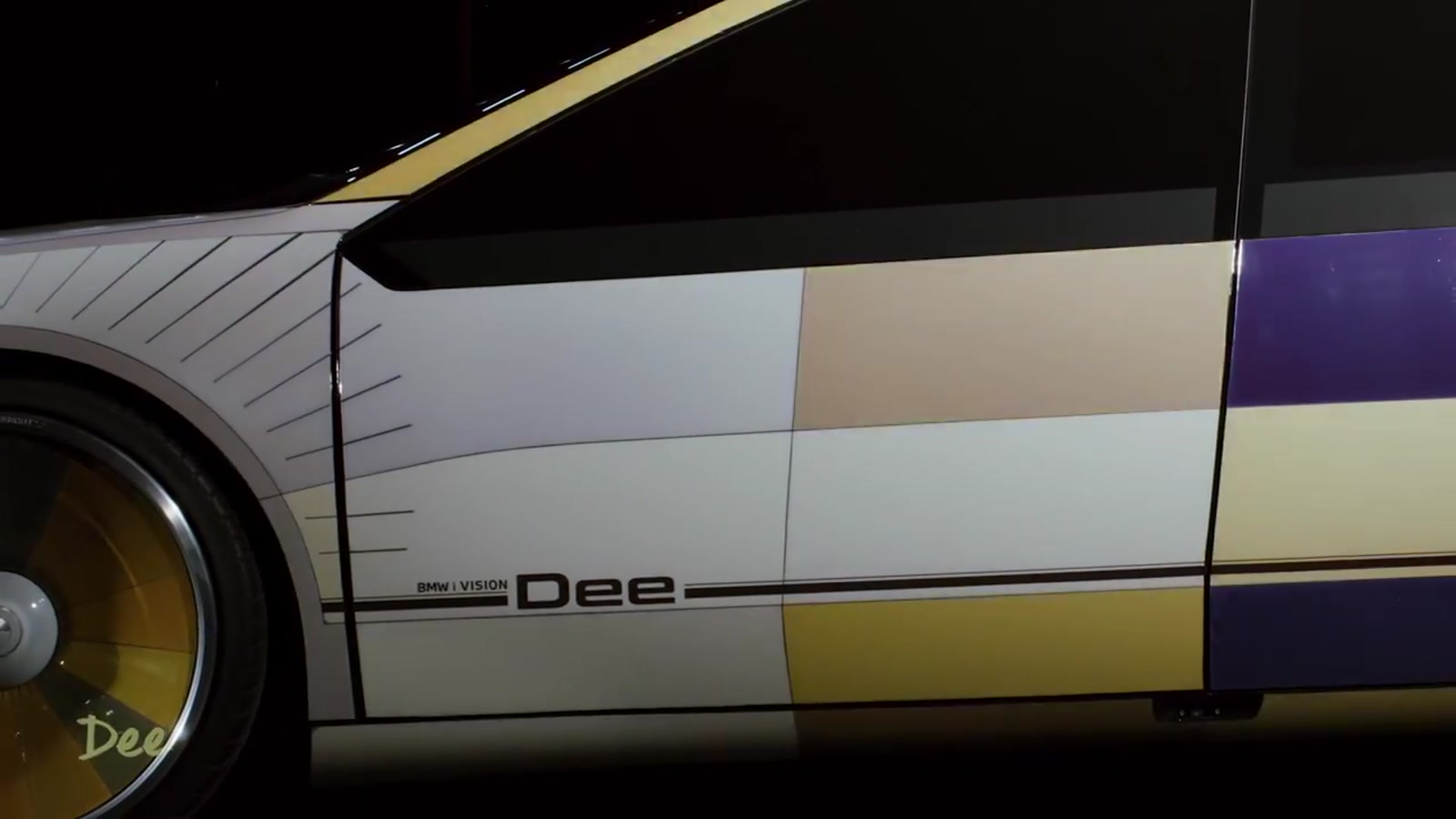
The car keeps its outline while its colours move. Blocks of pink, yellow, white and purple pass across the body of BMW’s i Vision Dee, making the familiar question of a car’s colour suddenly harder to answer.
The surface carries the motion
BMW presented the concept at CES 2023 in Las Vegas. The company describes an exterior made from 240 individually controlled E Ink segments, capable of displaying up to 32 colours. Separate areas can change together or form different patterns across the sedan.
The material comes from electronic paper technology. In its Prism 3 announcement, E Ink describes a segmented film that can be shaped for different products. The display uses energy when its appearance is updated, rather than continuously to hold the chosen colour.
In E Ink’s partnership film, wide views establish the complete car before closer shots turn doors, wheel covers and the front end into fields of moving colour. The panels remain readable as separate pieces. Their changing combinations do much of the visual work.
Keeping the silhouette steady lets the eye concentrate on the surface. A recognisable sedan stays in place while its bodywork keeps offering another graphic version of the same object.
A concept demonstration from 2023
Our short edit revisits the official film published on 17 January 2023. This story follows the colour-changing concept shown then; it does not establish a present-day retail specification or a delivery date for the complete Dee vehicle.
People & sources
BMW i Vision Dee concept: BMW Group with E Ink. Source partnership film: E Ink, published 17 January 2023. Original English narration and editorial: HurolHaber.

Cars
Porsche’s Electric Boxster Puts the Battery Where the Engine Used to Be
Porsche’s new electric 718 Boxster prototype puts the battery behind the seats and adds switchable virtual gear changes.
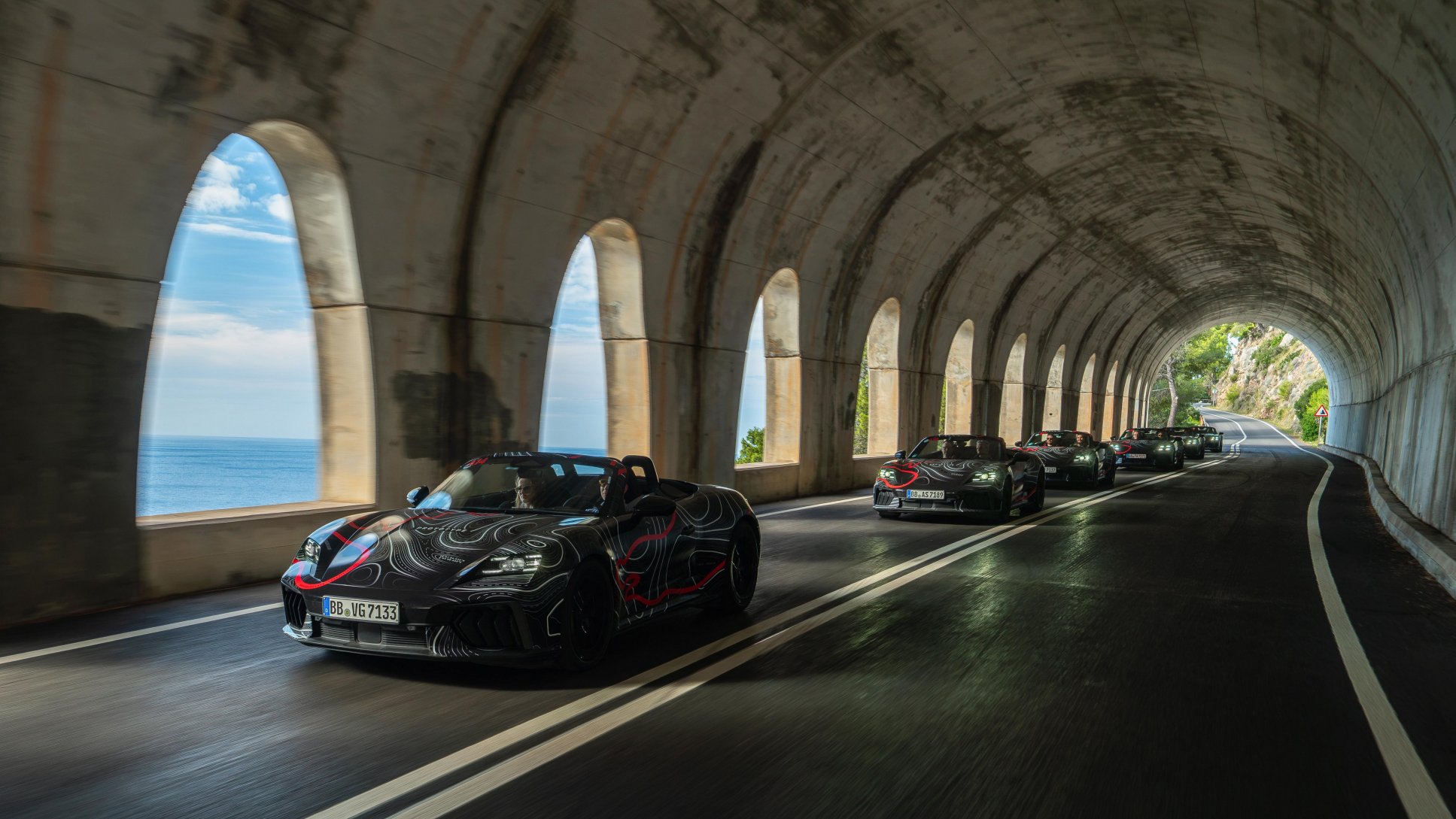
The engine is leaving. Its place in the car still matters. The new electric Boxster prototype turns the space behind your shoulders into the starting point for a familiar kind of sports car.
The weight stays in the middle
Porsche’s E-Core layout puts the battery behind the seats to retain a low driving position and weight concentrated near the centre.
That idea has a long memory. The original Boxster concept, unveiled in Detroit in 1993, revived the proportions of Porsche’s earlier open sports cars. The production Boxster that followed in 1996 put its engine ahead of the rear axle. The new prototype changes the source of propulsion while keeping the question of balance at the centre of the design.
The gear changes are virtual
E-Shift adds switchable virtual seven-speed PDK shifts and a recreated six-cylinder Boxster GTS soundtrack. The shifts are simulated; there is no seven-speed mechanical gearbox.
A preview, with a date to watch
Porsche’s 24 November 2026 preview schedules the production-car premiere for Q1 2027. Pricing, battery capacity and range remain unspecified in this release.
People & sources
Prototype, design, photographs and original footage: © Porsche AG / Porsche Newsroom / Porsche NewsTV. Development material released 24 November 2026. Original English narration and editorial: HurolHaber.
- Porsche — electric 718 Boxster development update, 24 November 2026
- Porsche NewsTV — official 718 Boxster prototype footage (released with the 24 November development update)
- Porsche — Development stories: 718 Boxster, Episode 1: The concept, 24 November 2026
- Porsche — the original Boxster concept, 14 January 2021 (archive background)
- Porsche — Right in the Middle, 18 September 2019 (archive background)
The 2021 and 2019 articles provide historical context, not current specifications. The NewsTV file carries an earlier metadata date; the release date above is not a filming date.
Cars
Nissan’s Pivo 2 Turns Its Wheels to Park Sideways
Nissan’s Pivo 2 separates the direction of the passenger cabin from the wheels, turning parking into a small mechanical performance.
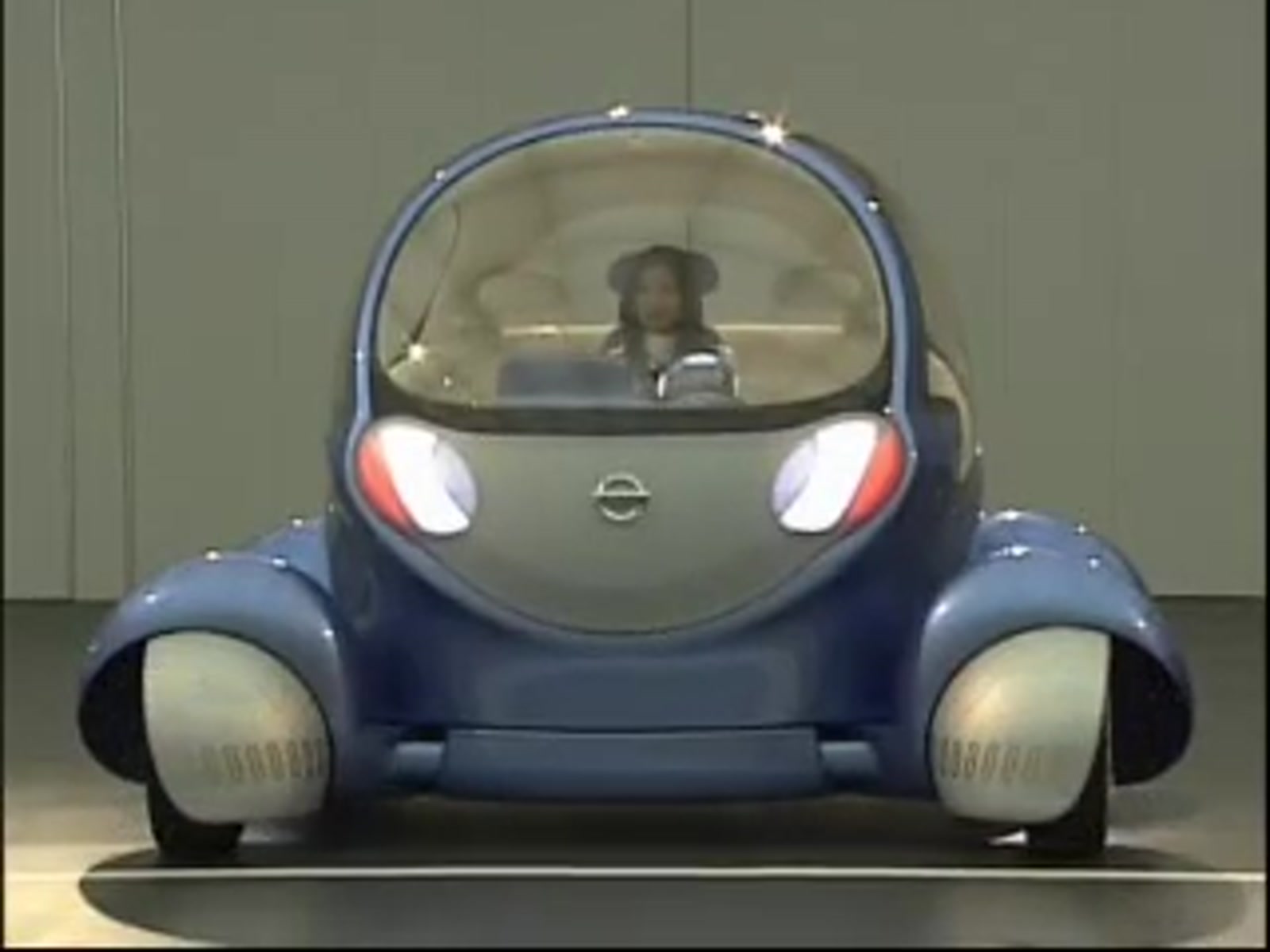
The wheels turn across the small blue car, and it moves sideways along the parking-space markings. Nissan’s Pivo 2 makes an awkward manoeuvre legible as a mechanical sequence: the wheel modules change direction while the body keeps its orientation.
Nissan unveiled the electric concept on 5 October 2007, ahead of that year’s Tokyo Motor Show. It developed an idea already explored by the first Pivo in 2005: a rotating cabin that would let occupants face the direction of travel without the usual reversal of the whole vehicle.
Two movements, two directions
For Pivo 2, the manufacturer described a cabin capable of turning through 360 degrees. Its four wheel modules could also steer through 90 degrees, allowing the concept to move sideways. Those are Nissan’s specifications for the show car, rather than a claim about a production model available to buy today.
The useful distinction is between two separate movements. Rotating the cabin changes the passengers’ orientation; steering the wheels across the chassis changes the direction in which the vehicle can move. Put together, the gestures suggest another way to approach a tight parking space.
An archive concept worth watching
The period demonstration collected here was published by CarBodyDesign in October 2007. It gives the wheel mechanism room to explain itself, with the rounded cabin and separate wheel modules kept visible. The selected footage clearly demonstrates wheel steering and sideways travel; the cabin-rotation capability is attributed to Nissan’s specification. Our edit revisits the design idea as an archive discovery, rather than presenting it as a new vehicle launch.
The little car is memorable because its unusual shape follows an unusual action. A design problem normally handled by steering, reversing and looking over a shoulder becomes a question about which part of the vehicle should turn. Watching that question become physical is the pleasure of the concept.
People & sources
Pivo 2 concept: Nissan. Archive demonstration footage: CarBodyDesign, published 5 October 2007. Original English narration and editorial: HurolHaber.
Cars
The Mercedes Vision AVTR Has Moving Scales on Its Back
The Avatar-inspired Mercedes-Benz show car turns a field of moving panels into an expressive part of its body.
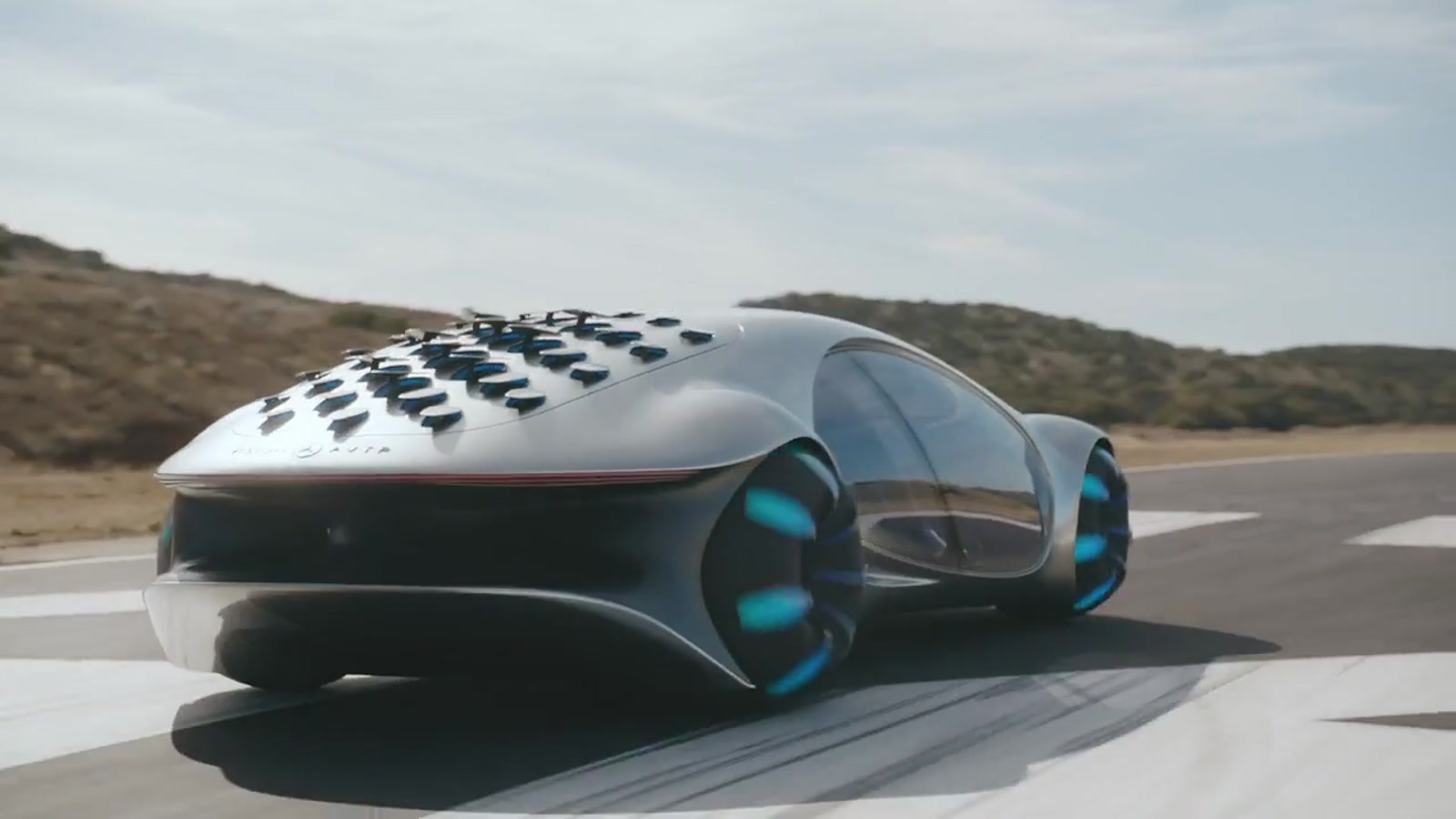
The most expressive part of this Mercedes is behind the passengers. Small panels across its back lift and tilt, breaking the smooth body into a moving field of scales. A car usually communicates through lamps and screens; VISION AVTR makes its outer surface part of the gesture.
A body that becomes a display
Mercedes-Benz introduced VISION AVTR at CES in Las Vegas in January 2020. Developed in collaboration with the Avatar team, the show car explored an organic relationship between the vehicle, its occupants and the surrounding environment. Its name also stands for Advanced Vehicle Transformation.
The manufacturer describes the 33 movable elements on the rear as bionic flaps. Their reptile-like appearance connects the car to the creature-inspired world of the film. Watching the panels rise together is more revealing than reading a specification: the familiar solid shell of a car becomes a coordinated pattern of small gestures.
Watch the demonstration as a concept study
The footage revisited here comes from the official Mercedes-Benz Türkiye demonstration published on 2 April 2021. It shows the physical show car and its moving surfaces. Our short edit concentrates on the visual behaviour of those panels, with their place on the whole vehicle kept visible.
The original presentation also discusses ambitious ideas for future mobility. Those proposals are part of the concept, rather than evidence that every proposed technology was production ready. This is a look back at the 2020 show car and the way it made body movement part of automotive expression.
People & sources
VISION AVTR concept: Mercedes-Benz, developed in collaboration with the Avatar team. Original demonstration film: Mercedes-Benz Türkiye. Original English narration and editorial: HurolHaber.
Cars
Tesla’s New FSD View Turns the Road into a Live 3D Interface
Tesla’s Reality View gives its driving display a movable virtual viewpoint and shows intended turns inside a generated scene.
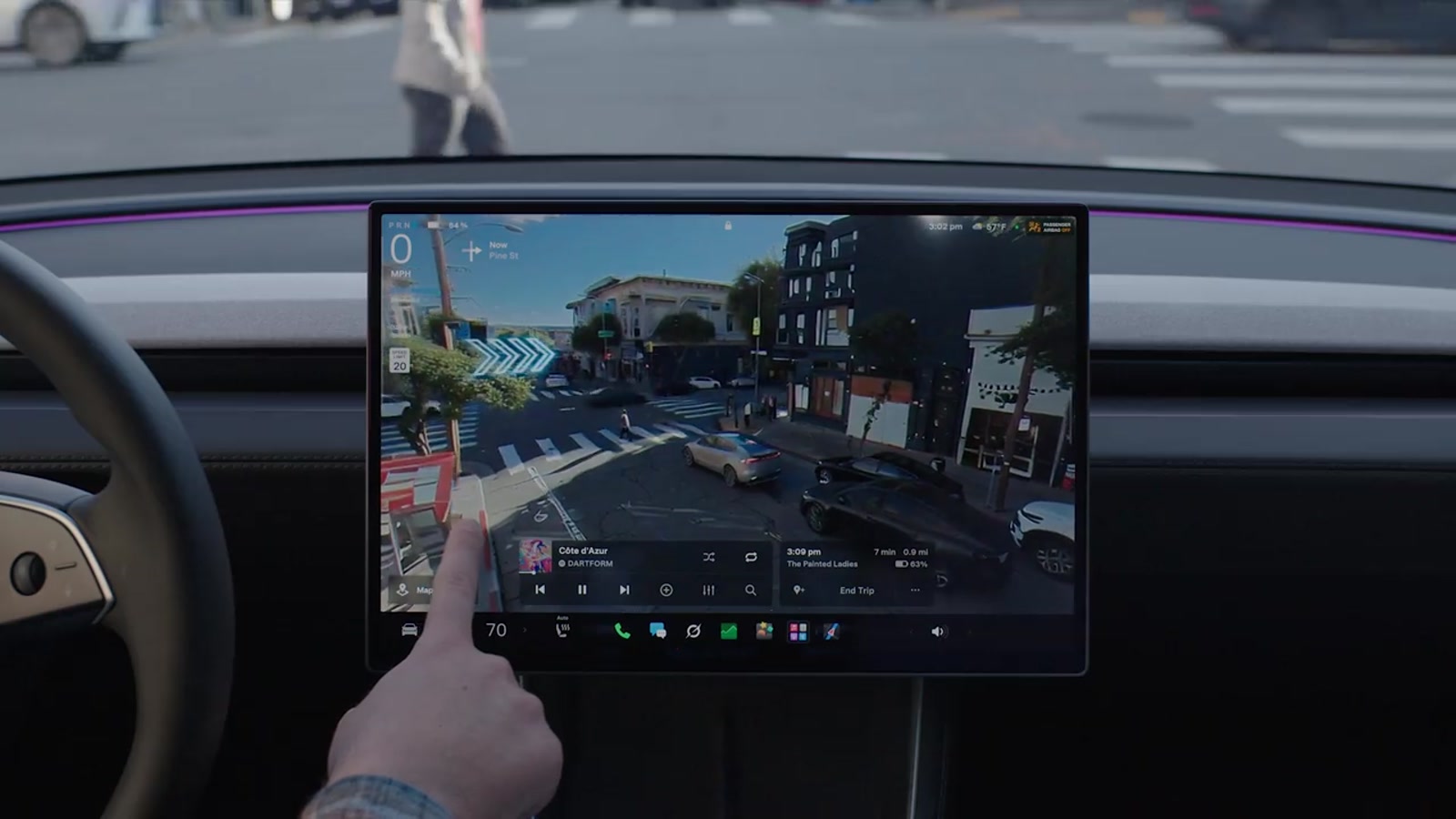
A finger moves across the touchscreen, and the view swings around the car. Beyond the screen, the road remains ahead through the windscreen. That small change of viewpoint is the most revealing moment in Tesla’s new FSD v15 presentation: the dashboard is showing a generated scene with its own virtual camera.
Tesla calls the feature Reality View. The company announced that v15 was starting to roll out on 21 November and published its official introduction video on 22 November. Its description presents Reality View as a real-time generative driving visualization from a virtual viewpoint above the vehicle.
A view that also shows intent
The approximately 36-second promotional edit moves between city streets, a coastal road, a highway and parking. Nearby vehicles and street details appear around the rendered Tesla, while a blue path and large navigation arrows show an intended route. In one sequence, a finger gesture accompanies a change from an elevated rear view to a view from the side.
Tesla says drivers can choose a fullscreen visualization, a map or a split view. In a post about the update, Ashok Elluswamy says the same end-to-end driving model also renders the surrounding scene. He describes the display as a way to communicate the vehicle’s intentions, including planned turns.
The interesting design question is how to make an automated system’s next action understandable. Reality View puts that explanation into the scene the driver is already trying to interpret.
Keep the demonstration in context
The film is an edited company presentation. Its opening uses the on-screen claim “25x safer.” Tesla’s accompanying description refers to improved handling of safety-critical cases. The retrieved announcement does not provide a comparison baseline or test protocol that would let us independently establish that multiplier.
Tesla’s current support guidance continues to require active driver supervision for FSD (Supervised). Feature availability also varies with configuration, hardware, software and region. The selected announcement and video do not establish a complete vehicle list or a Turkish availability date.
People & sources
Original demonstration footage and interface: Tesla. Technical statements: Tesla and Ashok Elluswamy. Original English narration and editorial: HurolHaber.
Cars
Audi’s skysphere Changes the Length of the Car
Audi’s 2021 electric concept makes a change of driving character visible in the proportions of its body.
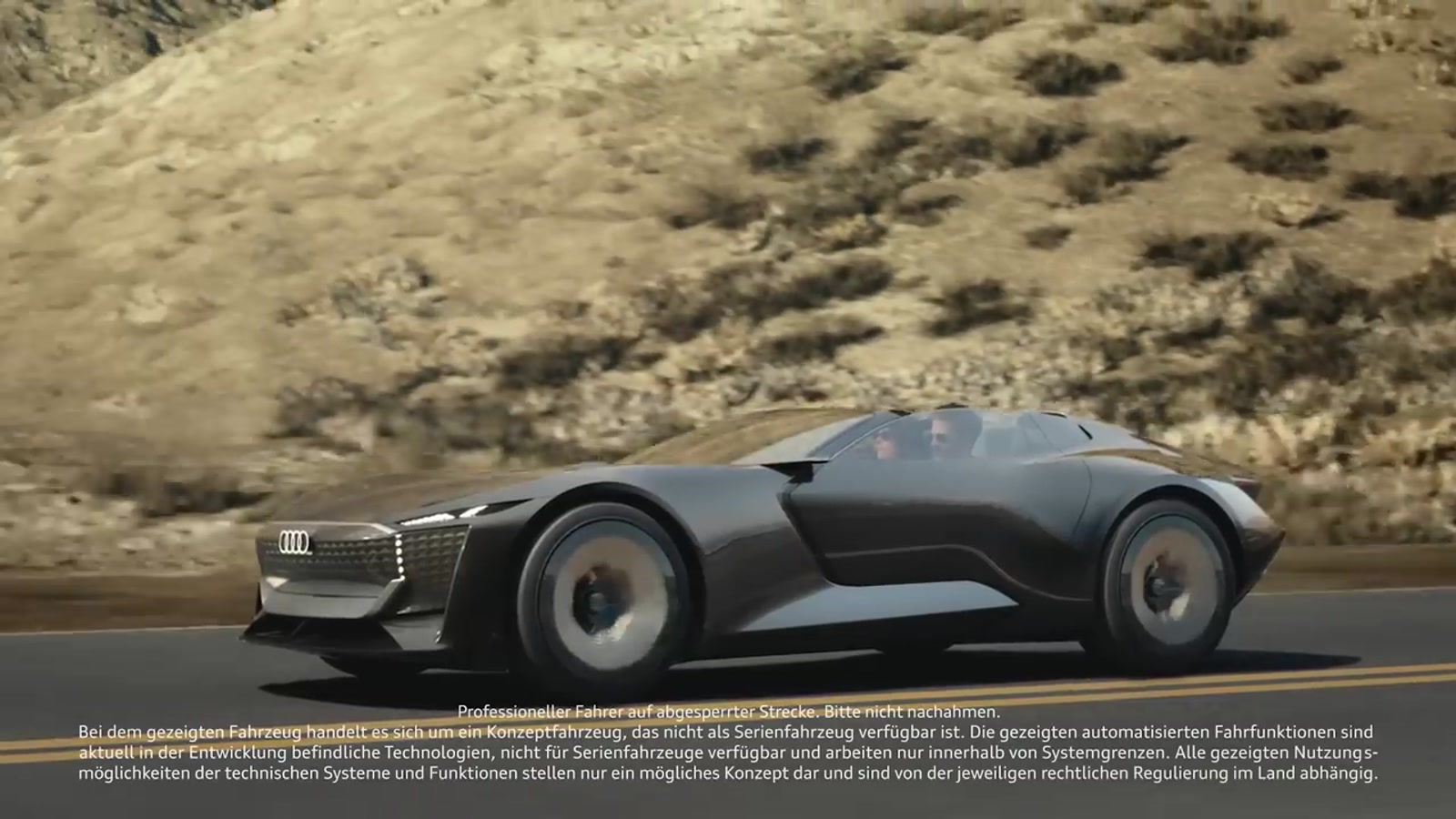
The most interesting detail of Audi’s skysphere is a gap that changes. Look behind the front wheel and the relationship between the wheel and the cabin begins to shift. The car’s proportions become an active part of its design.
A transformation in the proportions
Audi presented the electric concept in August 2021 with a wheelbase that can change by 250 millimetres. The proposal pairs a shorter roadster character with a longer grand-touring configuration. That difference is small enough to watch closely and large enough to change how the silhouette reads.
Following one fixed landmark in the body makes the idea easier to understand. Instead of scanning the whole car, watch the space between the front wheel and the passenger compartment. A moving joint tells the story.
A design proposal from 2021
Audi presented skysphere as an electric concept in August 2021. Its long grand-touring configuration was part of the company’s imagined autonomous-driving experience. We are returning to that proposal for its moving bodywork and the way a mechanical detail changes the car’s presence. The outdoor physical demonstration shown here was published by Top Gear in 2022; the concept’s introduction and that later demonstration are separate archive records.
People & sources
Concept design and official presentation film: AUDI AG. Physical wheelbase demonstration: Top Gear, 2022. Original English narration and editorial: HurolHaber.
Fletcher’s Capstan Table Opens into a Bigger Circle
BMW’s i Vision Dee Turns Its Bodywork into a Changing Pattern

Patrick’s Parabox Turns a Box into a World You Can Enter
Little Ark Sends a Wave Through a Boat That Goes Nowhere
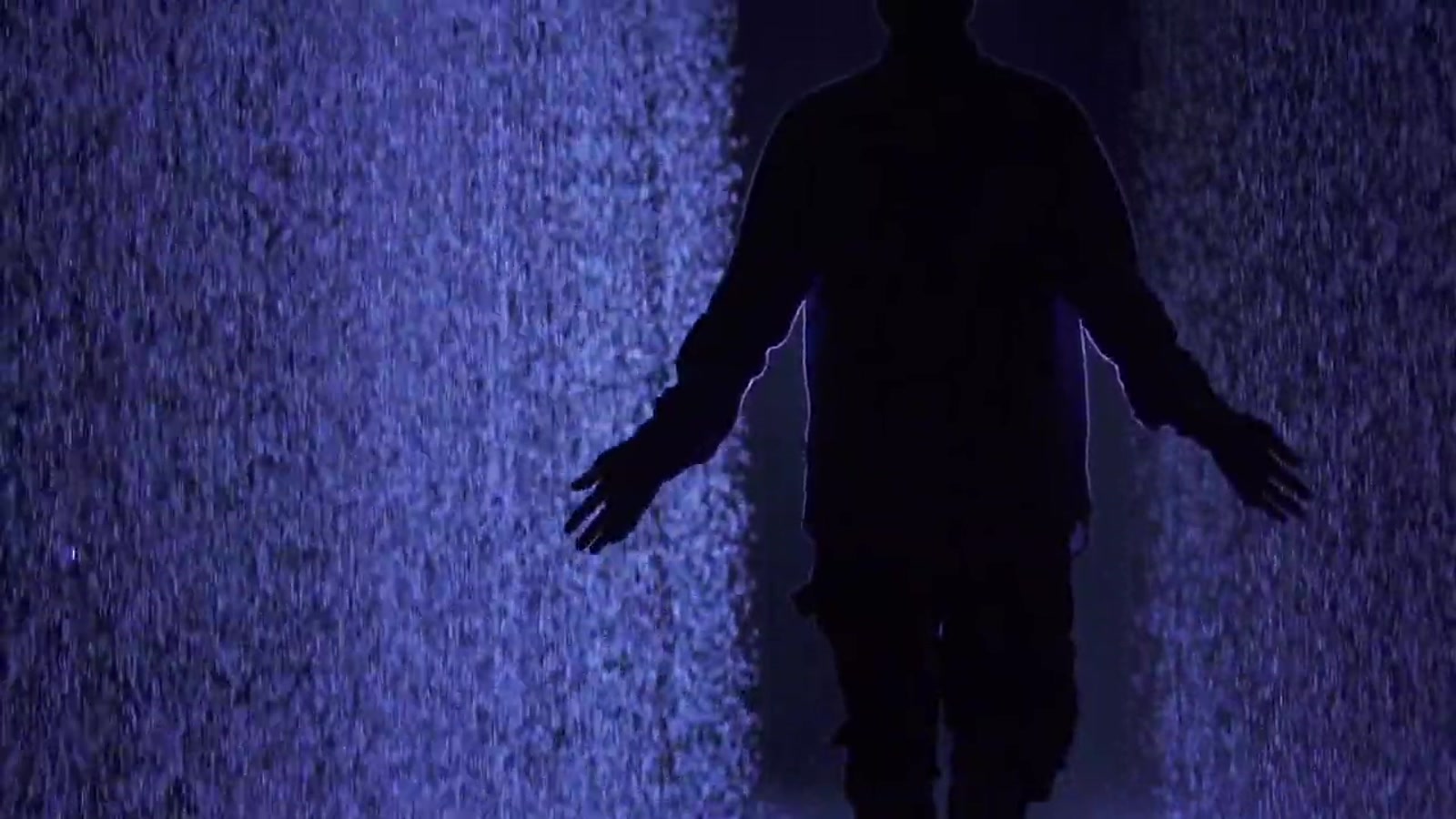
Rain Room Makes a Downpour Move Around You
Fletcher’s Capstan Table Opens into a Bigger Circle
BMW’s i Vision Dee Turns Its Bodywork into a Changing Pattern
Patrick’s Parabox Turns a Box into a World You Can Enter
Little Ark Sends a Wave Through a Boat That Goes Nowhere
Rain Room Makes a Downpour Move Around You




-

 Cars5 days ago
Singer’s Carrera Coupe Hides a Pair of Pop-Up Lights in Its Hood
-

 Design5 days ago
A Mechanical Garden Blooms Above the Palazzo Lobby
-

 Art5 days ago
Felix Semper’s Paper Sculptures Stretch Like Accordions
-
 Art5 days ago
John Edmark’s Spinning Sculptures Seem to Bloom
-
 Cars5 days ago
Ora Ïto Gives the Renault 17 a New Shape for an Electric Show Car
-
 Woodworking5 days ago
HygroShape Lets Flat-Packed Wood Find Its Furniture Form
-

 Art5 days ago
Thomas Deininger’s Birds Hide in a Tangle of Discarded Objects
-

 Games5 days ago
In Viewfinder, a Photograph Can Become the Path Ahead