
Games
Patrick’s Parabox Turns a Box into a World You Can Enter
Patrick Traynor’s puzzle game lets boxes become rooms, turning a small push into a journey through nested spaces.

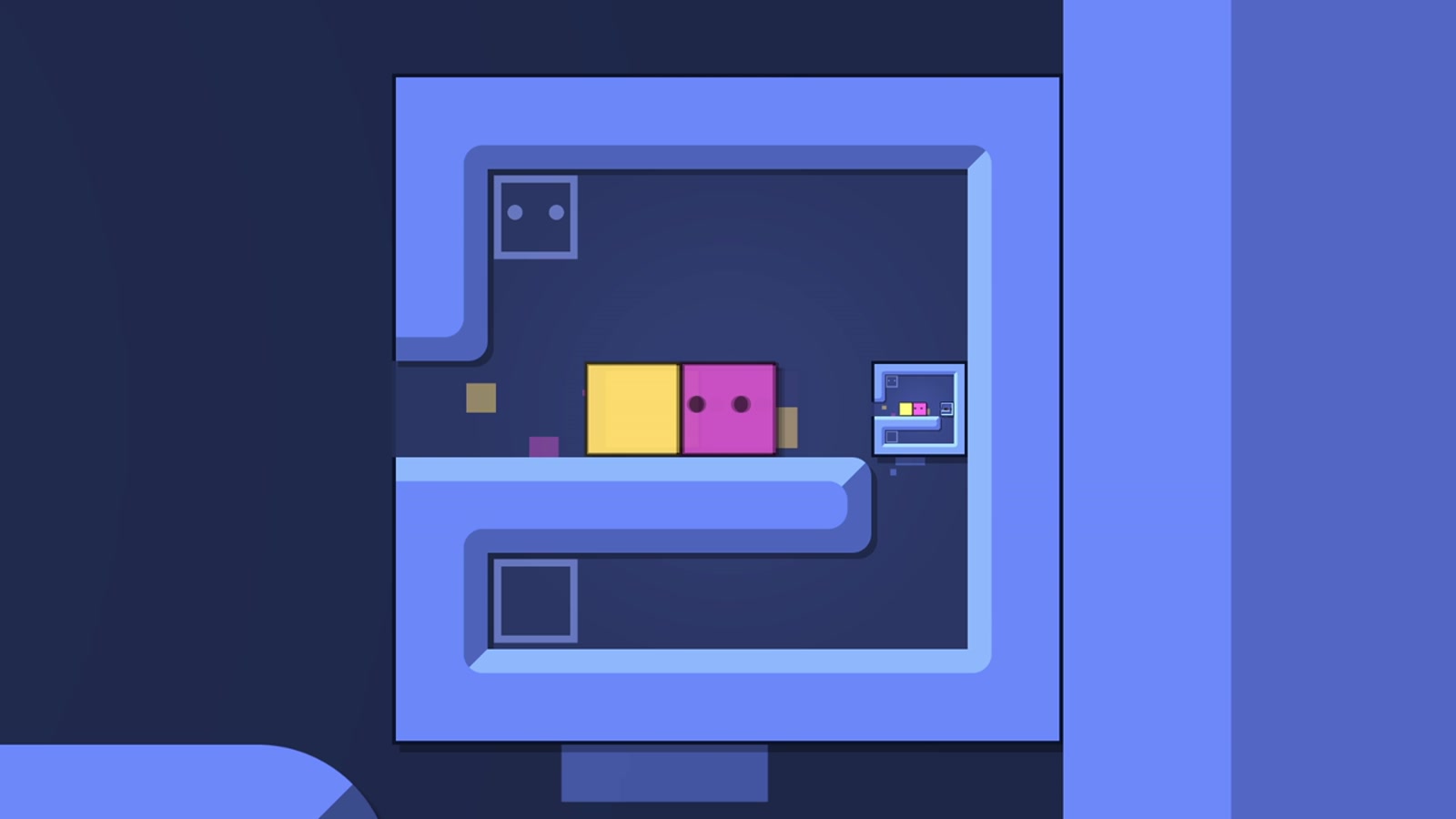
A box is blocking the way. Push against it, and the next space you need to explore can be the room inside it. Patrick’s Parabox finds its surprise in that tiny change: the obstacle has an interior.
Archive discovery: Patrick Traynor released Patrick’s Parabox for PC on 29 March 2022. The moving images here come from its official release-date trailer, rather than a new game announcement.
The map can become a piece
The game builds its puzzles around boxes that contain other spaces. A block can be pushed around a room, entered as another room, or used within a larger arrangement. Recursion means the relationship can turn back on itself: a box may contain itself.
In the official footage, coloured squares move through compact arrangements of corridors and other squares. A view pulls back from one puzzle to reveal it inside another. With very little decoration, the movement gives the player a new way to read the same outline.
Small actions, different questions
The developer lists more than 350 puzzles, including optional challenges. Music and sound design are by Priscilla Snow. Our narrated edit replaces the trailer soundtrack; the game’s own audio is part of the original work credited below.
What makes the idea worth keeping is its economy. There is no need for a grand spectacle before the space starts behaving strangely. You recognise a box, then have to reconsider what that recognition allows you to do. A simple push becomes a decision about which level of the world you are treating as real.
People & sources
Game design and official gameplay trailer: Patrick Traynor, Patrick’s Parabox (PC release: 29 March 2022). Original game music and sound design: Priscilla Snow (source audio not used). Original English narration and editorial: HurolHaber.

Games
The Plucky Squire Lets Its Hero Step off the Page
All Possible Futures turns a storybook into a place to enter and leave, moving Jot between flat illustrations and the desk around them.
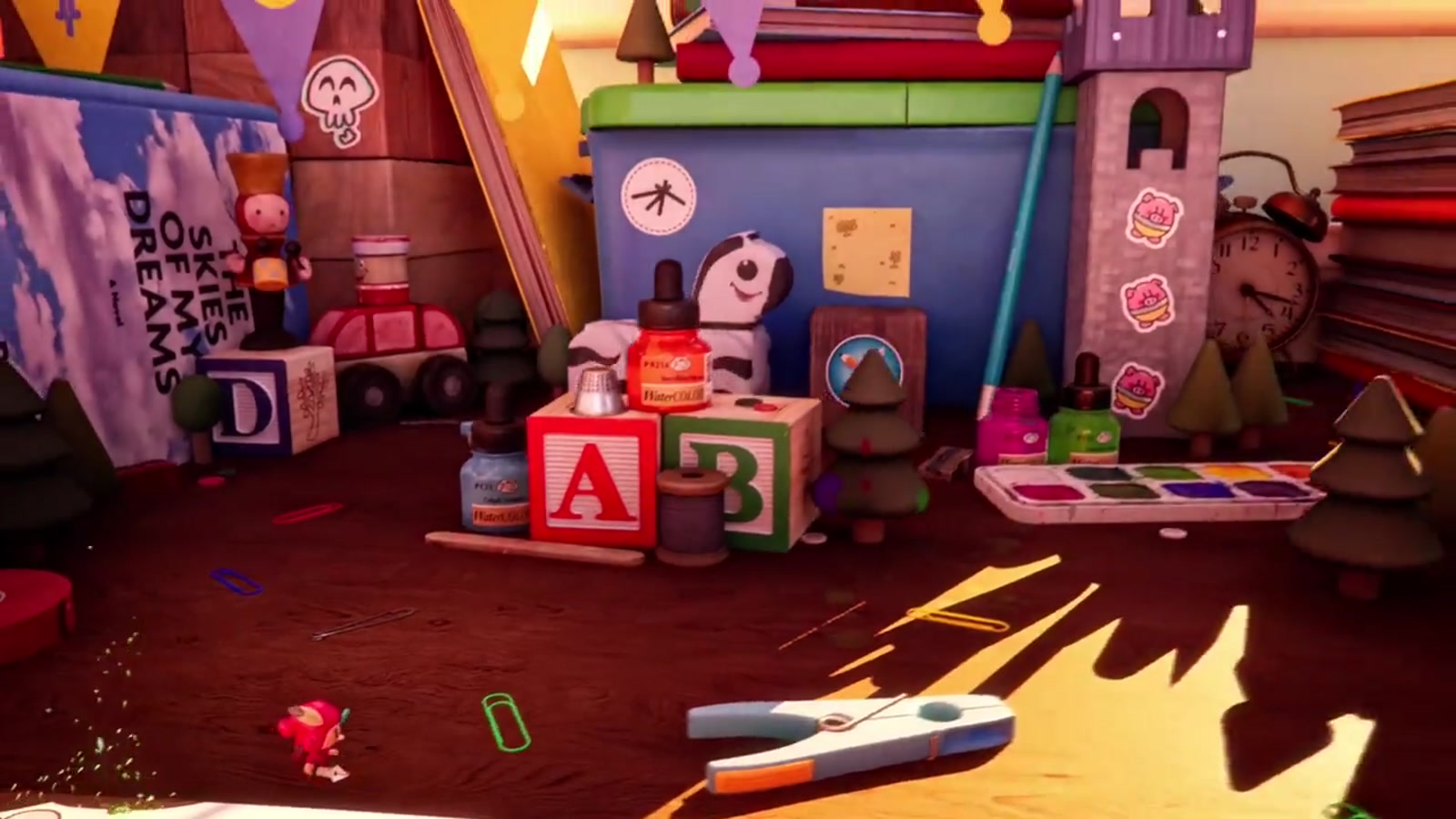
A storybook usually asks you to imagine a world beyond its pictures. The Plucky Squire makes that step something its hero can perform: Jot can leave a flat illustrated page and continue his adventure in the three-dimensional space around the book.
Created by All Possible Futures and published by Devolver Digital, the game was released on 17 September 2024. Its central character belongs to the land of Mojo, a storybook setting whose villain discovers that his fate has already been written. Jot is pushed beyond the pages, giving the familiar idea of changing a story a physical direction.
The change of perspective is the attraction. Inside the book, the action follows the logic of a drawn scene. Outside it, the book occupies space among the objects of a desk. A single illustrated surface can therefore be both an environment to travel through and something viewed from the outside.
A book with a way out
Co-creative director James Turner describes Jot’s ability to leap into the three-dimensional realm beyond his storybook. The developer and publisher frame the adventure around travel between those spaces, with puzzles, platforming and smaller challenges along the route.
The design also treats words as things the player can use. Devolver describes mixing and matching them to rewrite parts of the story. That makes the language on a page part of the play, alongside its pictures and its position in the room.
Our short edit draws on the official gameplay trailer rather than a recorded playthrough. It focuses on the movement between dimensions, where the book changes from a complete world into one object in a much bigger setting. The appeal is in seeing an ordinary act of imagination become a route you can follow.
People & sources
Game and official gameplay trailer: All Possible Futures / Devolver Digital. Original English narration and editorial: HurolHaber.
Games
In Superliminal, a Tiny Object Can Become the Way Out
Pillow Castle turns forced perspective into a playable rule: an object can change scale when you move it through a scene.
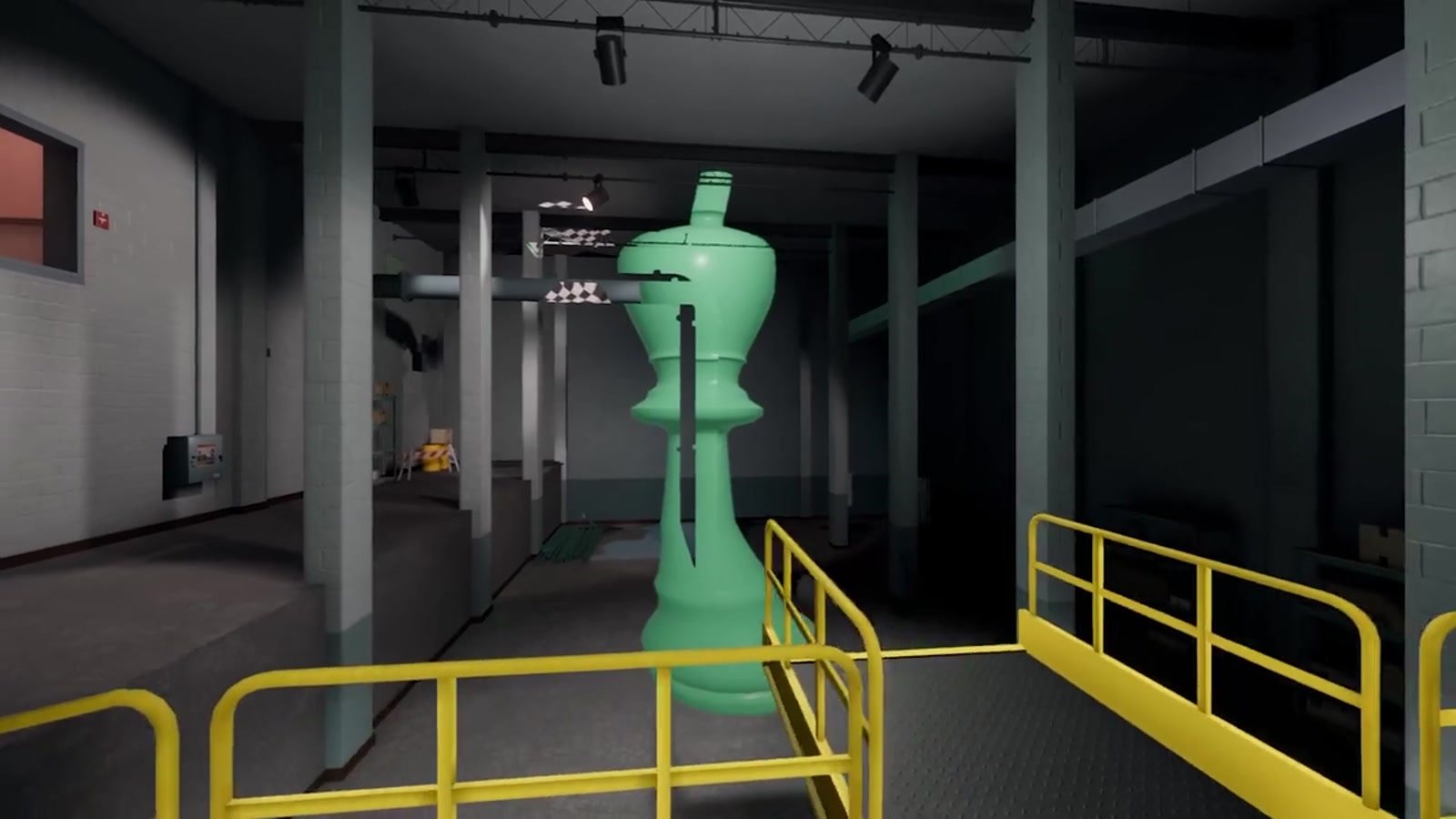
A little object can become a large obstacle, a platform or a way through the room. Superliminal builds its puzzles around that change in scale, asking you to treat your viewpoint as something you can use.
The first-person puzzle game is made by Pillow Castle. Its official description places the player inside a dream, where optical illusions become practical problems. The Steam edition was released on 5 November 2020; the footage collected here comes from its official Steam launch trailer.
In one sequence, an ordinary-looking monitor changes its relationship to the room around it. Elsewhere, a giant green chess piece occupies a platform. The game keeps borrowing recognisable objects, then making their apparent scale difficult to trust.
Let the viewpoint do the work
In a 2020 explanation for PlayStation, Pillow Castle graphics programmer Phil Fortier describes how a held object can retain its apparent size while the game changes its position in the scene. Releasing it at a different distance can leave it at a different scale. That rule gives the player a way to reach a ledge or rearrange a route.
The game also uses images that resolve into convincing shapes from particular positions. Moving through a room can reveal that a familiar outline is assembled from surfaces that do not belong together in the way you first assumed.
The appeal is in learning to look deliberately. A room that appears to offer too little space, or an object that seems uselessly small, may suggest another possibility from a different position. Our short edit draws on promotional gameplay footage; it is a look at the design idea rather than a recorded playthrough.
People & sources
Game and official Steam launch trailer: Pillow Castle. Original English narration and editorial: HurolHaber.
Games
Manifold Garden Lets You Choose Which Way Is Down
William Chyr Studio turns gravity into a way of reading an impossible architectural world.
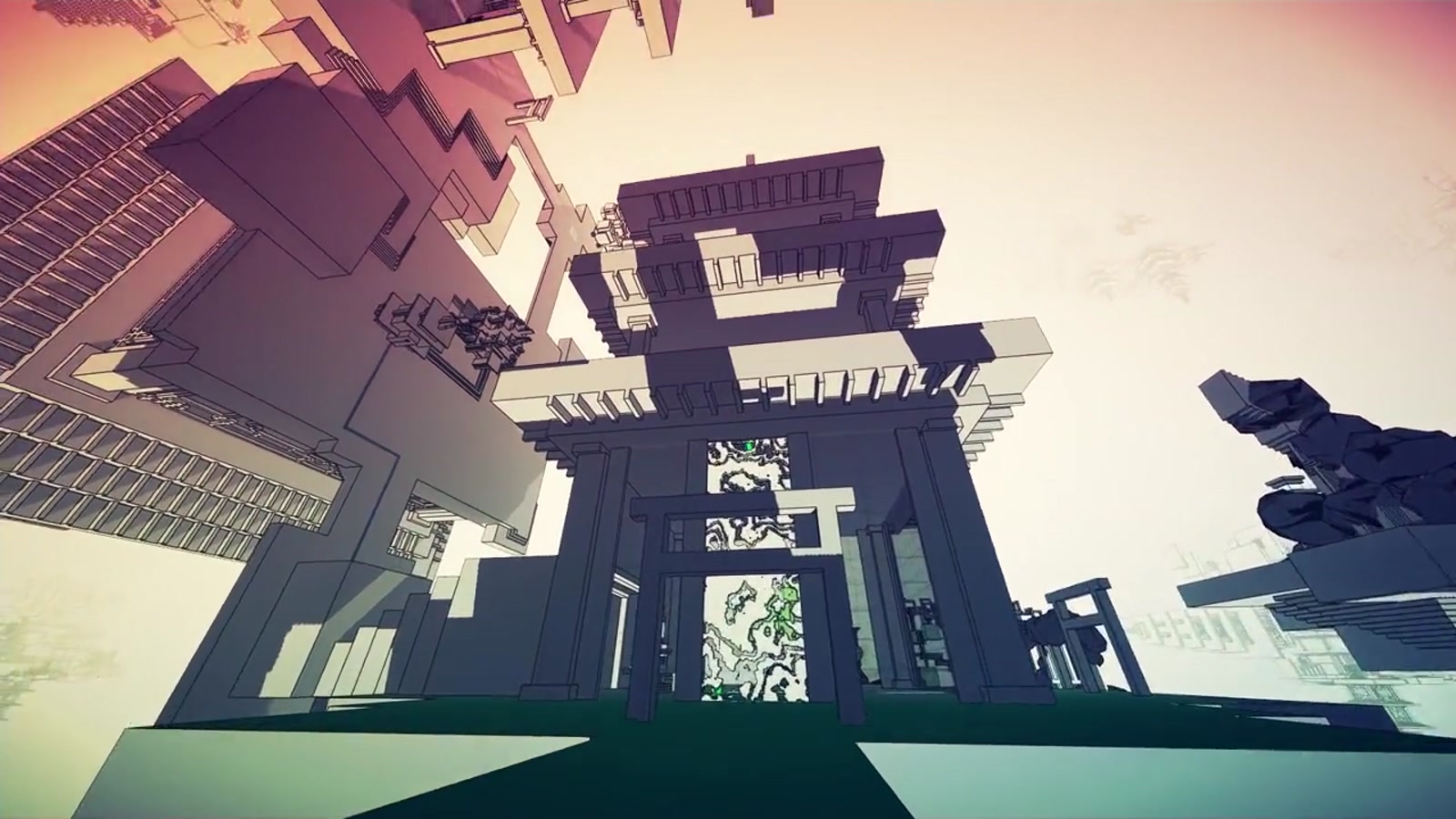
Stand in front of a wall, and it looks like the end of a route. Change gravity in Manifold Garden and that same wall becomes somewhere to walk. The architecture stays wonderfully strange; your relationship to it changes.
A puzzle you read with your feet
William Chyr Studio builds its world from structures that repeat in every direction. Moving between surfaces changes what counts as a floor, and a fall can return the player to a repeating part of the environment. Perspective becomes something to test through movement.
The pleasure is in watching a familiar view rearrange itself. An unreachable platform begins to look like a landing place. A distant pattern becomes a clue about the space around you. The game invites a slower, more curious kind of looking.
An archive discovery from 2019
The first release was on 18 October 2019 for the Epic Games Store and Apple Arcade. Steam followed on 20 October 2020. Those dates describe different platform releases of the same game; this story revisits its design rather than announcing a new launch.
People & sources
Game and official gameplay/trailer imagery: William Chyr Studio. Original English narration and editorial: HurolHaber.
Games
In Gorogoa, the Frame Is Part of the Puzzle
Move the drawing, change the world: Jason Roberts turns illustrated panels into an elegant puzzle about connections.
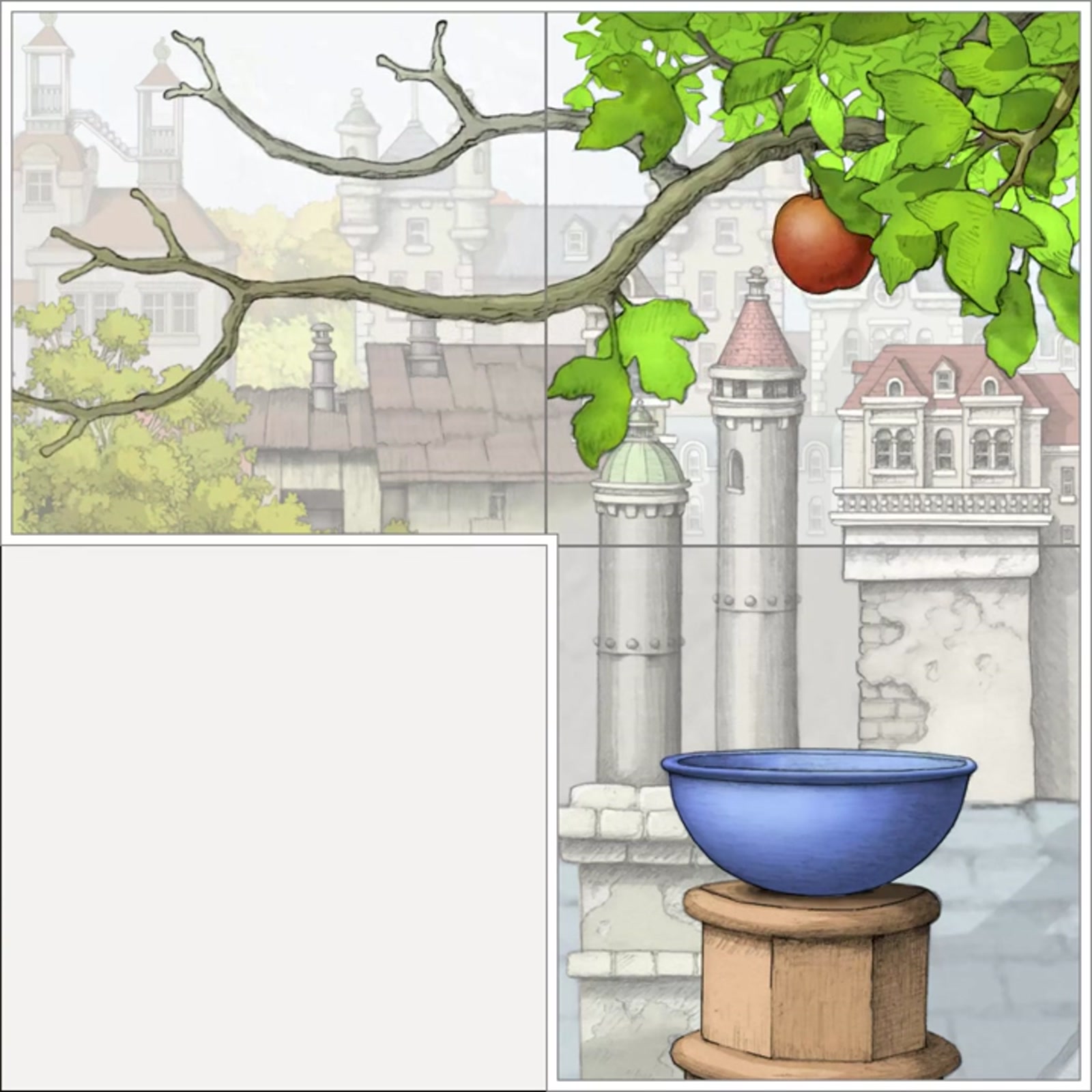
A drawing is usually something you look into. Gorogoa asks you to look around it, lift it away from its neighbours and try it somewhere else. The border becomes a tool, and the space between pictures becomes part of the puzzle.
A connection hiding in plain sight
The game places illustrated scenes in separate panels. Moving, aligning and overlapping those panels creates relationships that are not obvious when each picture is treated on its own. The satisfying moment arrives when two drawings suddenly read as one connected space.
It is a visual rule that can be understood by watching a small action. A picture changes position, and an apparent obstacle becomes the beginning of a route. The artwork carries the explanation.
The person behind the pictures
Gorogoa was designed and illustrated by Jason Roberts, developed under Buried Signal and published by Annapurna Interactive. It was released on 14 December 2017. We are revisiting that game as an archive discovery, rather than presenting it as a new release.
People & sources
Game, illustrations and official trailer: Jason Roberts / Buried Signal; publisher Annapurna Interactive. Original English narration and editorial: HurolHaber.
Games
COCOON Fits Whole Worlds Inside the Orbs You Carry
Carrying an orb also means carrying a place to explore in Geometric Interactive’s world-hopping puzzle game.
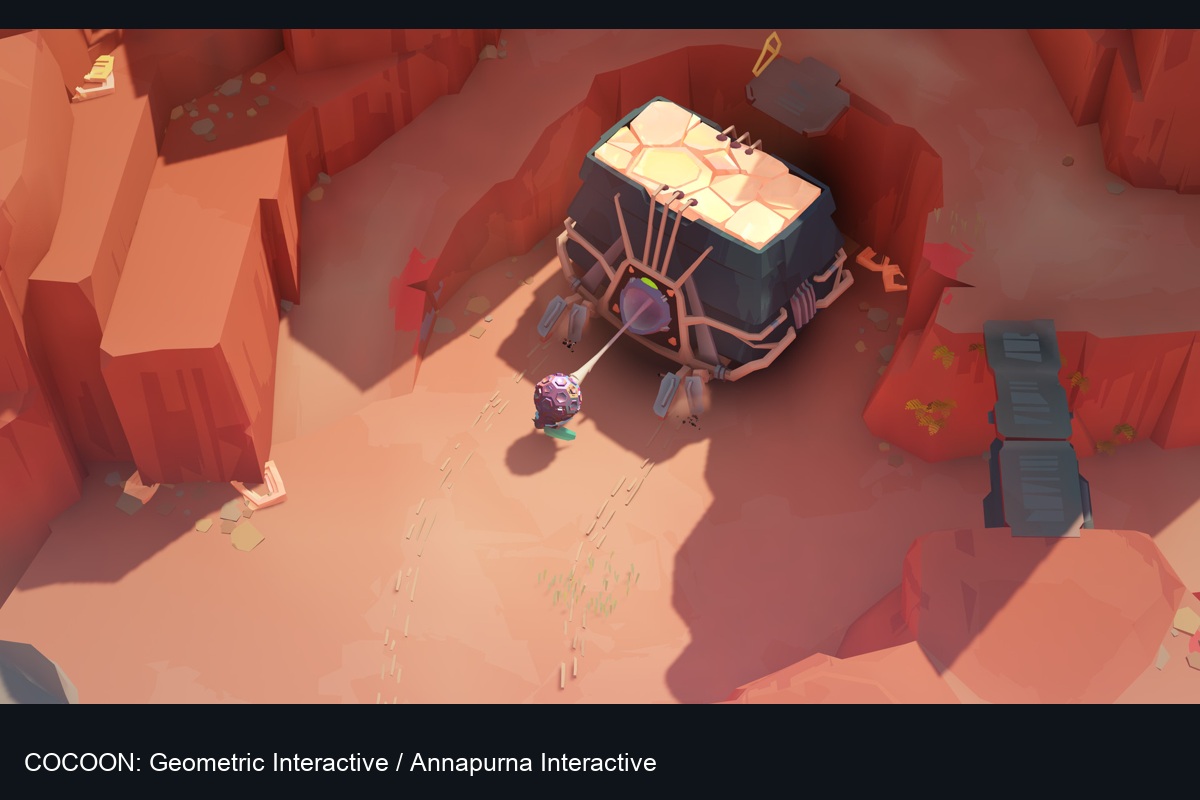
An orb is something to pick up, carry and put down. In COCOON, it is also an entire world to enter. The game gives a familiar puzzle action a remarkable second meaning: moving an object can mean moving a place.
Developed by Geometric Interactive and published by Annapurna Interactive, COCOON was released on 29 September 2023. Its world-leaping mechanic links environments contained within portable orbs, inviting the player to reconsider how one space can relate to another.
The attraction is how clearly the central idea can be shown. A small character carries a sphere, yet that sphere also holds a landscape. Once that relationship is established, objects and environments start to feel like different scales of the same puzzle.
For anyone collecting memorable game ideas, this is a satisfying example of one concept supporting an entire visual world. We are revisiting the 2023 game for its combination of spatial thinking, unusual environments and the pleasure of discovering what a simple-looking object can contain.
Creator and source credits: Game and source visuals: COCOON, Geometric Interactive / Annapurna Interactive. Original English narration and editorial: HurolHaber.
Sources: COCOON — official developer/publisher Steam page
Also watch on HurolHaber: Instagram Reel.
Fletcher’s Capstan Table Opens into a Bigger Circle

BMW’s i Vision Dee Turns Its Bodywork into a Changing Pattern
Patrick’s Parabox Turns a Box into a World You Can Enter
Little Ark Sends a Wave Through a Boat That Goes Nowhere
Rain Room Makes a Downpour Move Around You
Fletcher’s Capstan Table Opens into a Bigger Circle
BMW’s i Vision Dee Turns Its Bodywork into a Changing Pattern
Patrick’s Parabox Turns a Box into a World You Can Enter
Little Ark Sends a Wave Through a Boat That Goes Nowhere
Rain Room Makes a Downpour Move Around You



-

 Cars5 days ago
Singer’s Carrera Coupe Hides a Pair of Pop-Up Lights in Its Hood
-

 Design5 days ago
A Mechanical Garden Blooms Above the Palazzo Lobby
-

 Art5 days ago
Felix Semper’s Paper Sculptures Stretch Like Accordions
-

 Art5 days ago
John Edmark’s Spinning Sculptures Seem to Bloom
-

 Cars5 days ago
Ora Ïto Gives the Renault 17 a New Shape for an Electric Show Car
-

 Woodworking5 days ago
HygroShape Lets Flat-Packed Wood Find Its Furniture Form
-
 Games5 days ago
In Viewfinder, a Photograph Can Become the Path Ahead
-

 Art5 days ago
Thomas Deininger’s Birds Hide in a Tangle of Discarded Objects