
Art
Daniel Wurtzel makes a fountain that carries fabric through the air
Daniel Wurtzel uses moving air to send light fabric into an unpredictable dance at Switzerland’s Technorama.

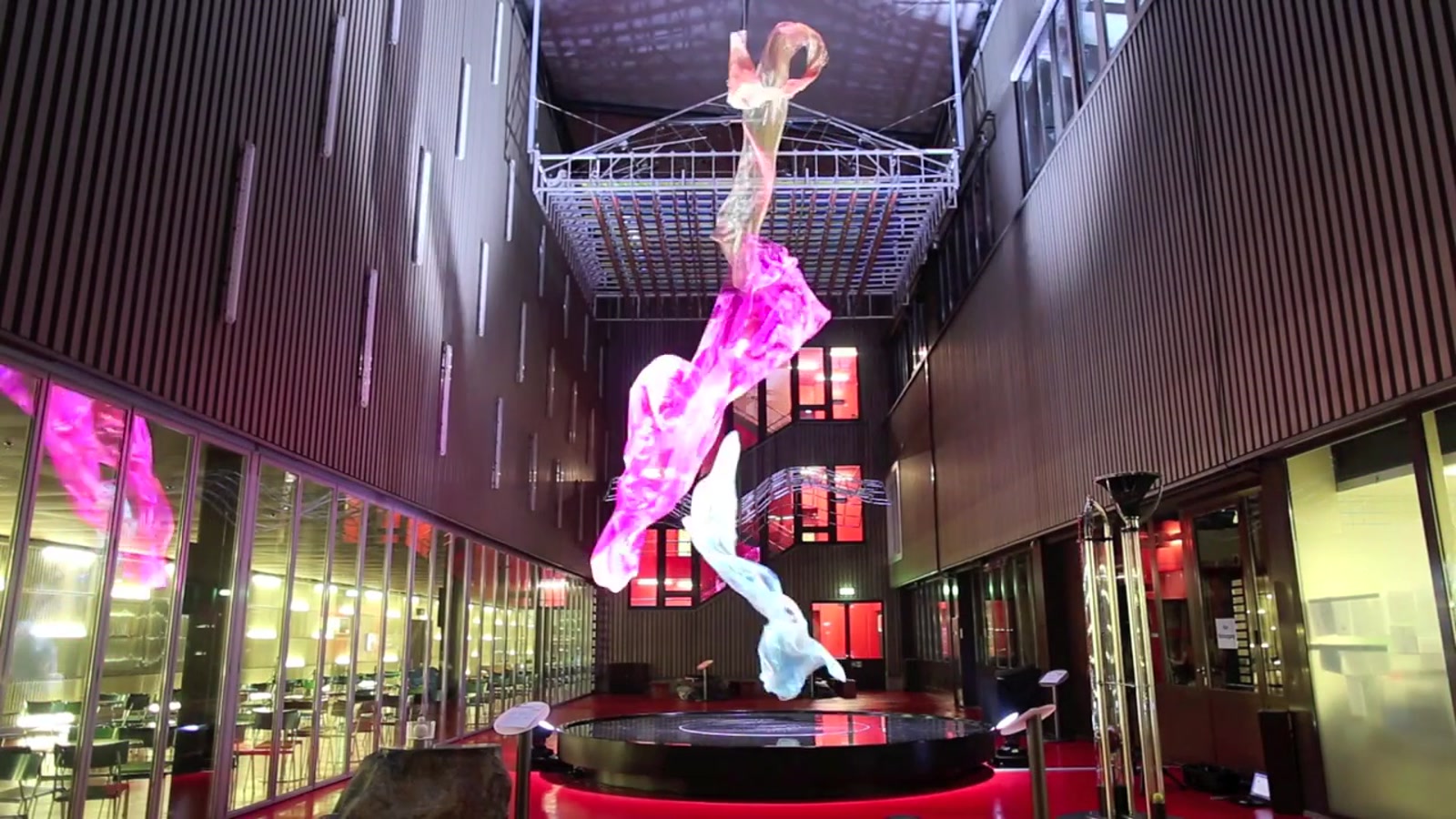
The cloth rises, gathers into a loose shape and folds away again. Its edges seem to be testing the room. In Daniel Wurtzel's Air Fountain, the material gives a visible outline to something we usually notice only when it moves other things: air.
Wurtzel's Air Series explores lightweight materials carried by air currents. The artist describes an interest in finding order inside changing airflow, using the physical properties of ordinary materials to produce experiences that keep unfolding. The fabric remains free to move, and its changing shape becomes the event we follow.
The version documented at the Swiss Science Center Technorama has a five-metre-diameter base, according to the artist's portfolio. His exhibition history dates the permanent installation there to 2016. Technorama describes a participatory work in which visitors on the platform can put cloth into the airflow and influence the scene. Its explanatory material credits the realisation jointly to the museum and Wurtzel.
There is also a recent chapter in the installation's history. In an update dated 16 October 2026, the museum reported testing Air Fountain beneath a temporary enclosure for its planned new setting. The future arrangement would send the fabric through an opening between floors, with the upper flight space separated from visitors by glass. The museum said the test fabrics continued to move successfully beneath the provisional cover. This is a plan and test report, rather than a claim that the rebuilt display is already open.
The archive footage shown here records the existing Technorama installation. Its appeal lies in how little explanation the moving fabric needs: a few moments are enough to start following a fold, lose it and find another.
ARCHIVE FOOTAGE · TECHNORAMA INSTALLATION.
Air Fountain artwork and source footage: Daniel Wurtzel; Technorama installation realised by Technorama and Daniel Wurtzel. Original English editorial and narration: HurolHaber.
Sources
- Daniel Wurtzel — official Air Series portfolio
- Daniel Wurtzel — official biography and installation history
- Technorama — Air Fountain exhibit information
- Technorama 2050 — Air Fountain tests, 16 October 2026
- Daniel Wurtzel — artist statement
- Daniel Wurtzel — Air Fountain at Technorama, official artist video

Art
Reuben Margolin built two raindrops from wood, pulleys and a mile of cable
Reuben Margolin turns intersecting ripples into a suspended wooden machine in his 2007 sculpture Double Raindrop.
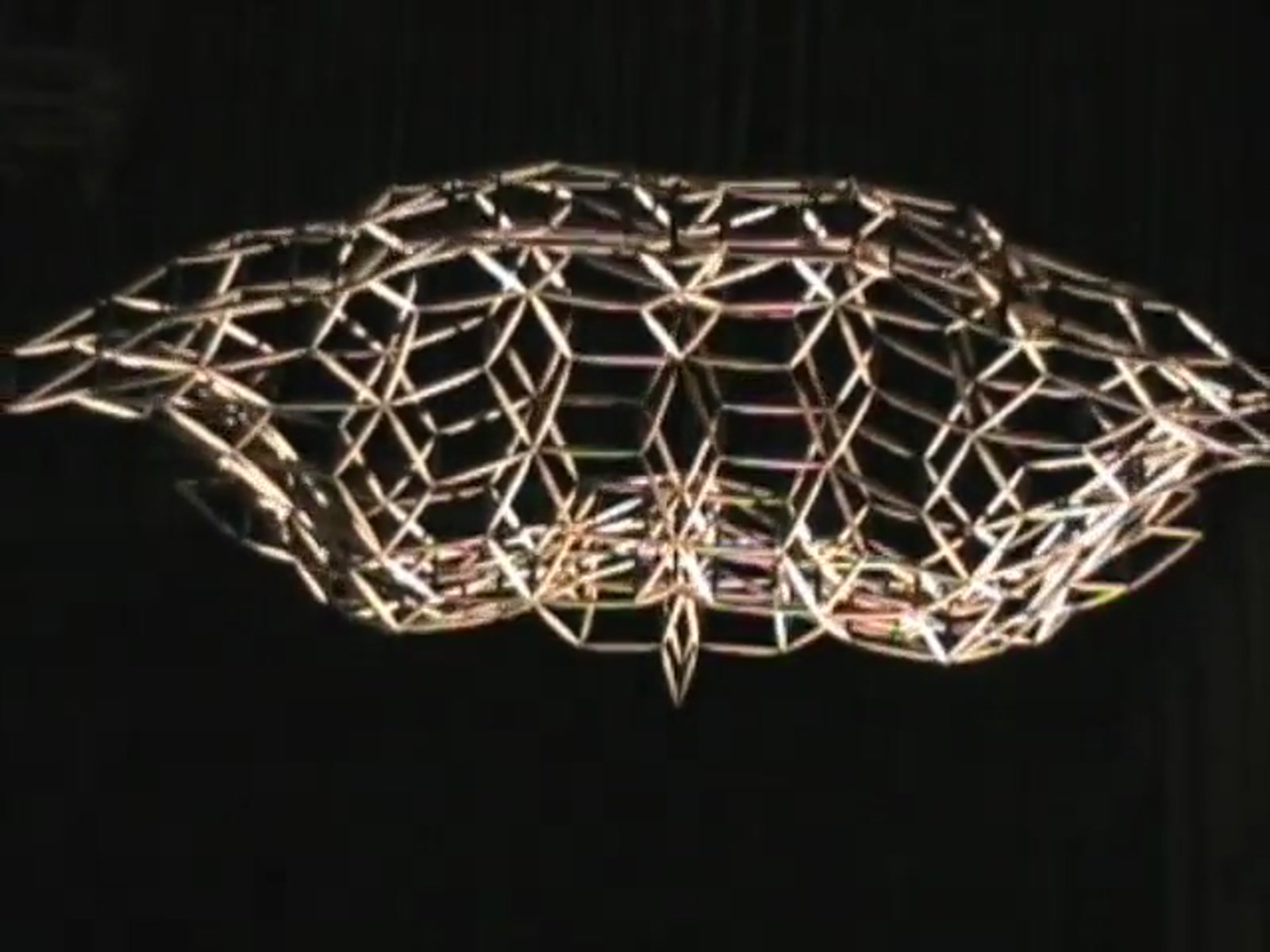
Watch one small piece rise and fall, then let your eye move across the structure. The motion joins up into a much larger event. Reuben Margolin's Double Raindrop takes a pattern that briefly appears on water and gives it a mechanical body.
The artist dates the sculpture to 2007. It measures eight feet in diameter and uses wood, lead, steel cable and electric motors. His project record gives two particularly striking measures of the underlying apparatus: 500 pulleys and a mile of cable. Those materials carry an idea that begins with two drops landing close to one another.
Each drop produces a spreading disturbance. Where the two patterns meet, their movement combines. Margolin identifies that interference as the inspiration for Double Raindrop. The sculpture offers time to follow a relationship that would be gone from a puddle almost as soon as you noticed it.
Seen in the artist's video, the moving wooden field has a different presence from an animation. It occupies a room, and the supporting apparatus remains part of what you are watching. The eye can travel between a local rise or dip and the larger wave crossing the form. The mechanism is worth looking at alongside the shape it produces.
This is an archive discovery of an existing work, rather than a new commission announcement. Its interest remains immediate because the subject is so familiar. Almost anyone has watched rain break up a still surface; here, cables and pulleys offer a way to slow down that observation and stay with it.
There is a quiet pleasure in switching between scales: follow one wooden element for a moment, then take in the whole piece. The same motion reads first as a small repeated journey and then as a pattern shared across the sculpture.
ARTIST ARCHIVE · DOUBLE RAINDROP (2007).
Double Raindrop (2007) artwork and official source video: Reuben Margolin. Original English editorial and narration: HurolHaber.
Sources
Art
Little Ark Sends a Wave Through a Boat That Goes Nowhere
Choe U-Ram’s Little Ark lifts and lowers mechanical oars, turning a stationary vessel into a moving question about direction.
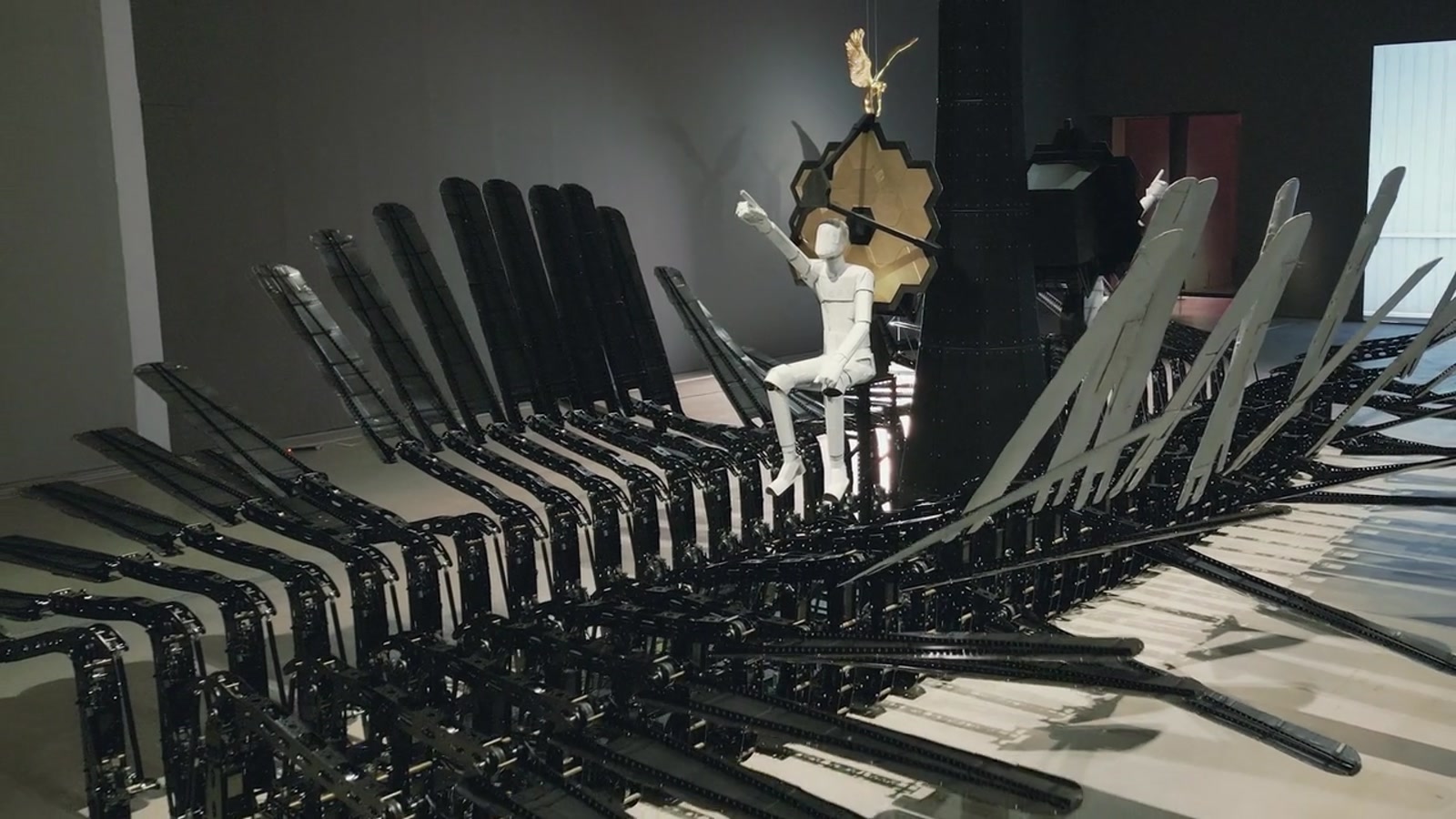
The boat never leaves the gallery. Its oars lift and fold, making the space around it feel as though a voyage has begun.
Archive discovery: Little Ark is a 2022 kinetic sculpture by Choe U-Ram. It was central to his MMCA exhibition in Seoul, which ran from 9 September 2022 to 26 February 2023. The film shown here documents that earlier project.
The oars become the image
The museum describes a vessel of iron and recycled cardboard, animated by machinery. Thirty-five pairs of oars can stand upright like a wall, then open outward like wings.
Close views reveal repeating joints; wider shots follow pale paddles along the vessel. Small movements become a larger wave. The camera makes that change of scale part of the encounter.
Movement is not the same as direction
MMCA frames the exhibition around conflicting desires and uncertainty about society’s direction. The object lets that idea arrive through movement: a machine performs gestures of travel while remaining in place.
Writing for Hyundai Artlab in December 2022, Shannon Lee connects the work with questions about progress. For us, the unresolved destination is what keeps the motion interesting.
People & sources
Artwork: © Choe U-Ram, Little Ark (2022). Exhibition: National Museum of Modern and Contemporary Art, Korea (MMCA), in partnership with Hyundai Motor Company. Original film: © Hyundai Motor Company, via Hyundai Artlab. Original English narration and editorial: HurolHaber.
- MMCA — Hyundai Motor Series 2022: Choe U-Ram – Little Ark, archived exhibition
- Hyundai Artlab — official exhibition film: MMCA Hyundai Motor Series 2022: Choe U-Ram
- Hyundai Artlab — Searching Beyond the Immediately Observable, 21 December 2022
The source page identifies the film with the 2022 exhibition but does not display an exact film publication date. Exhibition dates above are historical, not a current visiting notice.
Art
Rain Room Makes a Downpour Move Around You
RANDOM INTERNATIONAL’s Rain Room pauses falling water around detected visitors, making a step into the downpour part of the artwork.
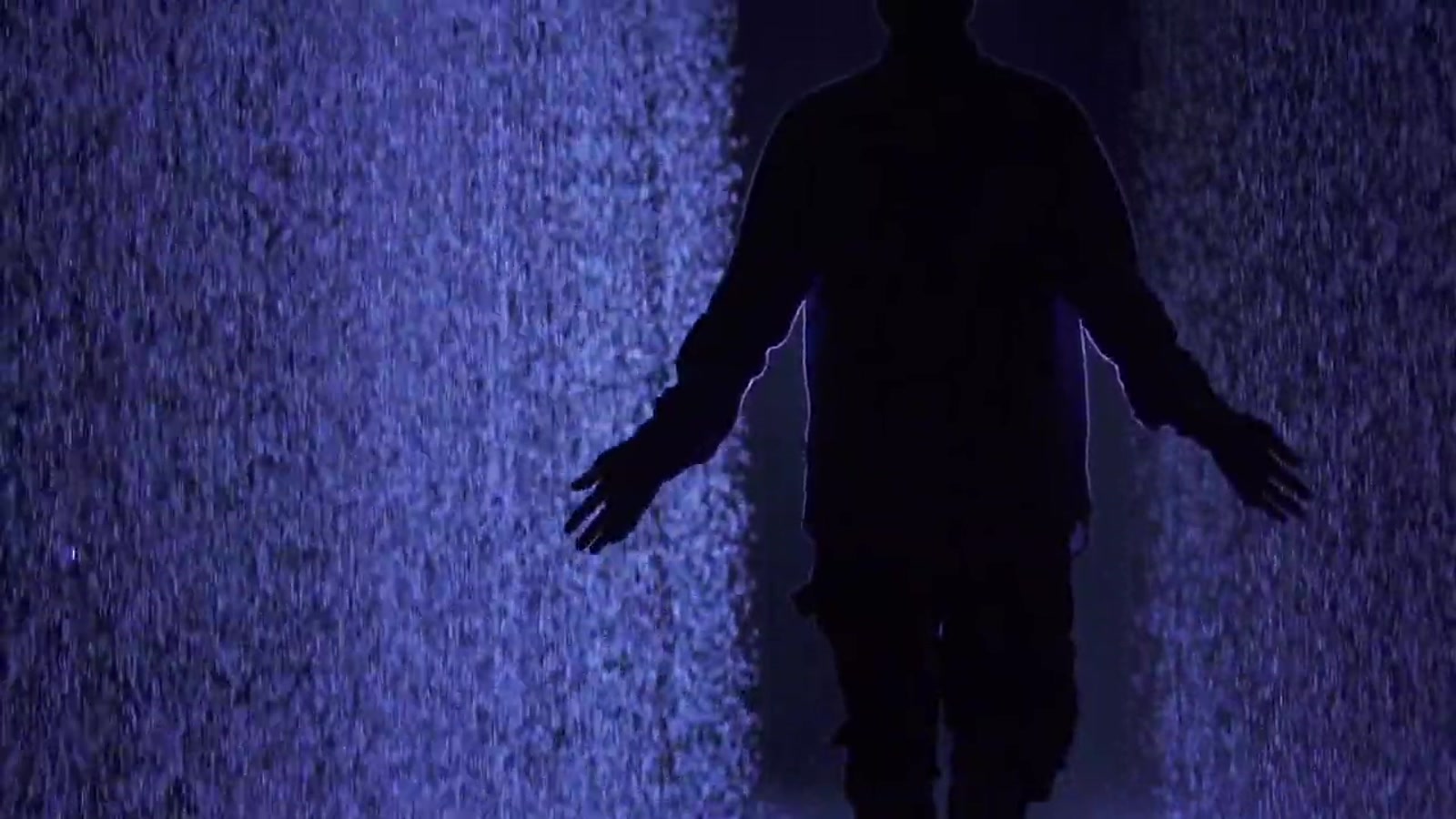
A person walks into a wall of rain. The sensible response would be to turn back. In Rain Room, stepping forward is the point: the falling water changes around the body that has entered it.
Archive discovery: RANDOM INTERNATIONAL created Rain Room in 2012. The footage here comes from the Barbican Centre’s original film, published that October; this is a look back at the work, not an announcement of a new exhibition.
A moving pocket of space
LACMA describes an environment of continuously falling water that pauses wherever a human body is detected. The result is a small area of relative shelter inside a much larger downpour. Your movement becomes part of the work’s behaviour.
In the Barbican film, a silhouette faces a brightly lit curtain of water. An arm reaches outward, a shoe crosses the wet floor, and droplets catch the light. Those details give the installation a physical scale: its image is made from water, light and a person deciding how to move.
The next step is the interface
The studio, established in 2005, explores human relationships with technology through art. Here, the encounter starts before any technical explanation. A familiar reflex—avoiding the rain—becomes a decision to trust the space.
The drama is not a storm growing stronger. It is a familiar space becoming uncertain. The visitor appears as a silhouette, while the clearest sign of their presence is the gap left in the falling water.
People & sources
Artwork: RANDOM INTERNATIONAL, Rain Room (2012). Original film: Barbican Centre / Gramafilm, published 8 October 2012; original score by Max Richter (not used in this edit). Original English narration and editorial: HurolHaber.
Art
Kinetic Rain Turns Separate Droplets into a Moving Surface
ART+COM’s Kinetic Rain uses individually suspended copper-coloured droplets to draw changing forms above Changi Airport’s departure hall.
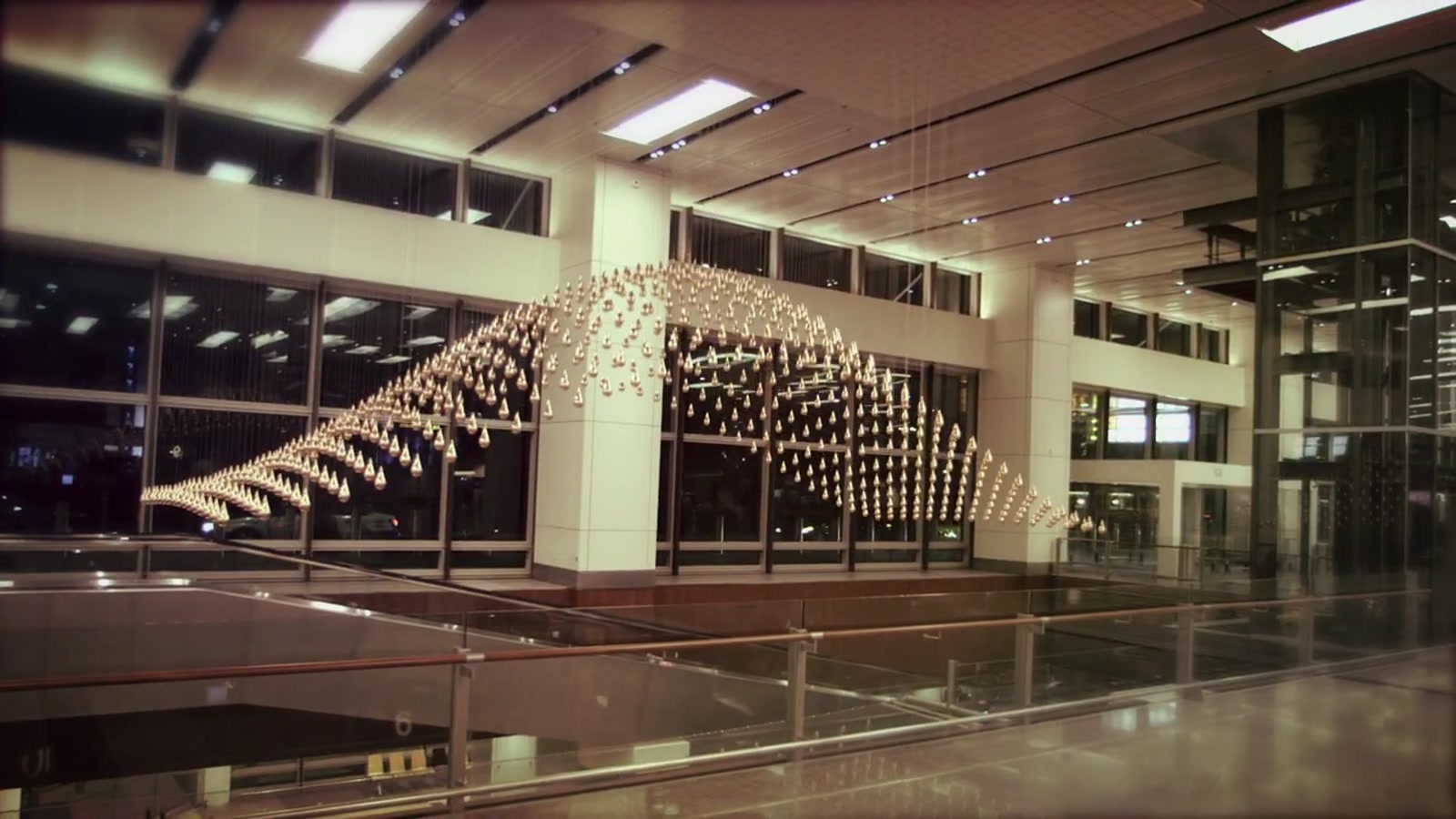
A field of copper-coloured droplets bends into a wave, then changes its outline again. The forms remain separate, yet their changing heights make them read as one continuous surface floating in the departure hall.
The installation was created by ART+COM for Singapore’s Changi Airport Terminal 1 in 2012. Two suspended fields sit above the central escalators, giving the busy hall a slowly changing piece of choreography to look up at.
Small movements, larger shapes
ART+COM describes two sets of 608 droplets, making 1,216 in total. Each copper-plated aluminium form hangs from a thin steel wire connected to an individually controlled motor. The mechanism gives every point a vertical path; the coordinated heights create the larger image.
The studio’s project record describes a fifteen-minute sequence in which the two parts can move together, mirror one another or follow different but related patterns. Abstract surfaces give way to more recognisable forms. The official airport film moves between close views of the droplets and wider views that show the sculpture’s relationship to the hall.
That change in distance is part of the pleasure. From nearby, you can follow a small metallic object moving along its cable. From farther away, the same elements begin to suggest a sheet, a wave or an outline passing through the air. Neither view cancels the other: the physical pieces remain visible while the larger figure emerges.
An archive discovery from 2012
MKT manufactured and installed the work for ART+COM. The project brings software, mechanical control and material together without hiding the droplets that do the moving. This short edit revisits the airport’s original 2012 documentation; it is a look at the artwork’s design rather than a new opening announcement.
People & sources
Artwork: ART+COM Studios, Kinetic Rain (2012). Commissioned by Changi Airport Group; manufactured and installed by MKT, Olching. Original film: Changi Airport Group. Original English narration and editorial: HurolHaber.
Art
Zimoun Turns a Wall of Cardboard Boxes into a Restless Instrument
Zimoun’s 2011 installation uses small motors, cotton balls and cardboard boxes to turn repeated mechanical movement into a shifting sound field.
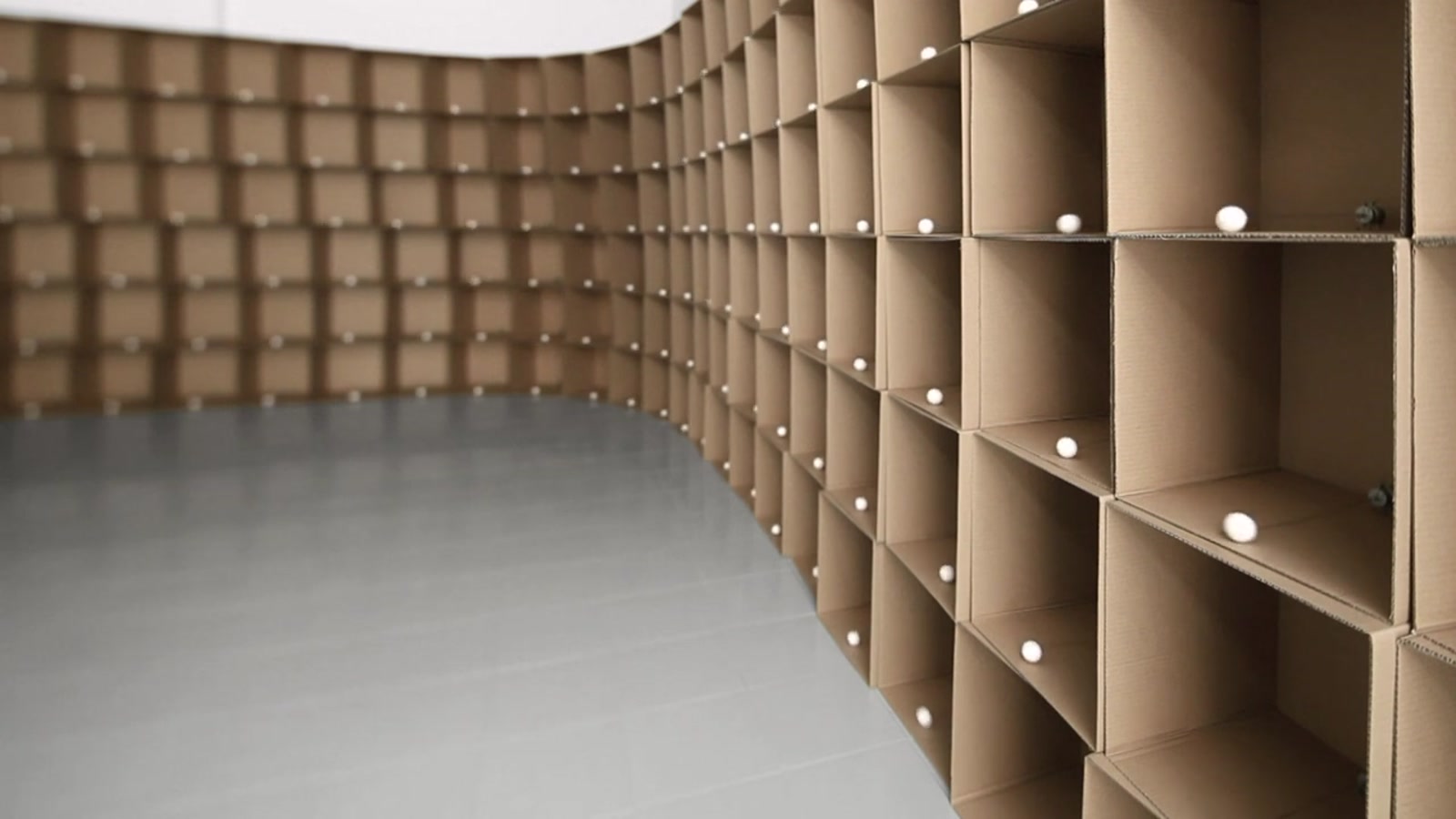
A white cotton ball moves against brown cardboard. Repeat that small event across a wall and the familiar packing material becomes the structure of an instrument. Zimoun’s 2011 installation at Lydgalleriet in Bergen turns a simple mechanical action into a dense, changing field.
The work’s descriptive title lists its ingredients: 138 prepared dc-motors, cotton balls, cardboard boxes 40x40x40cm. The artist’s documentation adds filler wires and a power supply to that inventory. Its materials are easy to recognise, which makes it possible to follow an individual moving element before taking in the larger arrangement.
A pattern built from differences
Lydgalleriet places the installation within a series informed by Karl Popper’s distinction between the regularity of clocks and the irregularity of clouds. The gallery describes Zimoun’s use of small mechanical movements and slight differences between individual units to build complex soundscapes.
That relationship is the reason to linger. An ordered grid gives the work a clear framework, while the activity within it keeps pulling attention from one point to another. The repeat is legible; the combined result keeps changing.
Cardboard also makes the action readable. It functions as both the visual field around each moving ball and a material that participates in the sound. The work invites the eye to trace the same event that produces the installation’s acoustic texture.
An installation from 2011
This is a discovery from Zimoun’s archive. The footage documents the 2011 Lydgalleriet installation, curated by Jørgen Larsson, rather than a newly announced exhibition. The artist credits Jacob Alrø, Tolga Balci, Vanessa Gageos and Florian Bürki for assistance.
The appeal lies in how much emerges from so little: a motor, a wire, a soft ball and an everyday box, repeated until the room starts to feel active.
People & sources
Artwork and original documentation: Zimoun. Installation view: Lydgalleriet, Bergen, Norway, 2011; curated by Jørgen Larsson. Assisted by Jacob Alrø, Tolga Balci, Vanessa Gageos and Florian Bürki. Original English narration and editorial: HurolHaber.

Flow Wall Desk Turns a Wooden Wall Panel into a Place to Work

BMW’s Vision Next 100 Made the Bodywork Move with the Wheels

Reuben Margolin built two raindrops from wood, pulleys and a mile of cable

Daniel Wurtzel makes a fountain that carries fabric through the air

In SCHiM, the safest route is the shadow of something moving
Flow Wall Desk Turns a Wooden Wall Panel into a Place to Work
BMW’s Vision Next 100 Made the Bodywork Move with the Wheels
Reuben Margolin built two raindrops from wood, pulleys and a mile of cable
Daniel Wurtzel makes a fountain that carries fabric through the air
In SCHiM, the safest route is the shadow of something moving



-

 Cars6 days ago
Tesla’s New FSD View Turns the Road into a Live 3D Interface
-
 Art1 week ago
John Edmark’s Spinning Sculptures Seem to Bloom
-
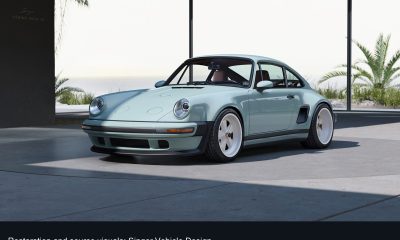
 Cars1 week ago
Singer’s Carrera Coupe Hides a Pair of Pop-Up Lights in Its Hood
-
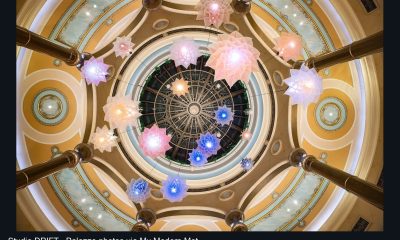
 Design1 week ago
A Mechanical Garden Blooms Above the Palazzo Lobby
-

 Art1 week ago
Felix Semper’s Paper Sculptures Stretch Like Accordions
-
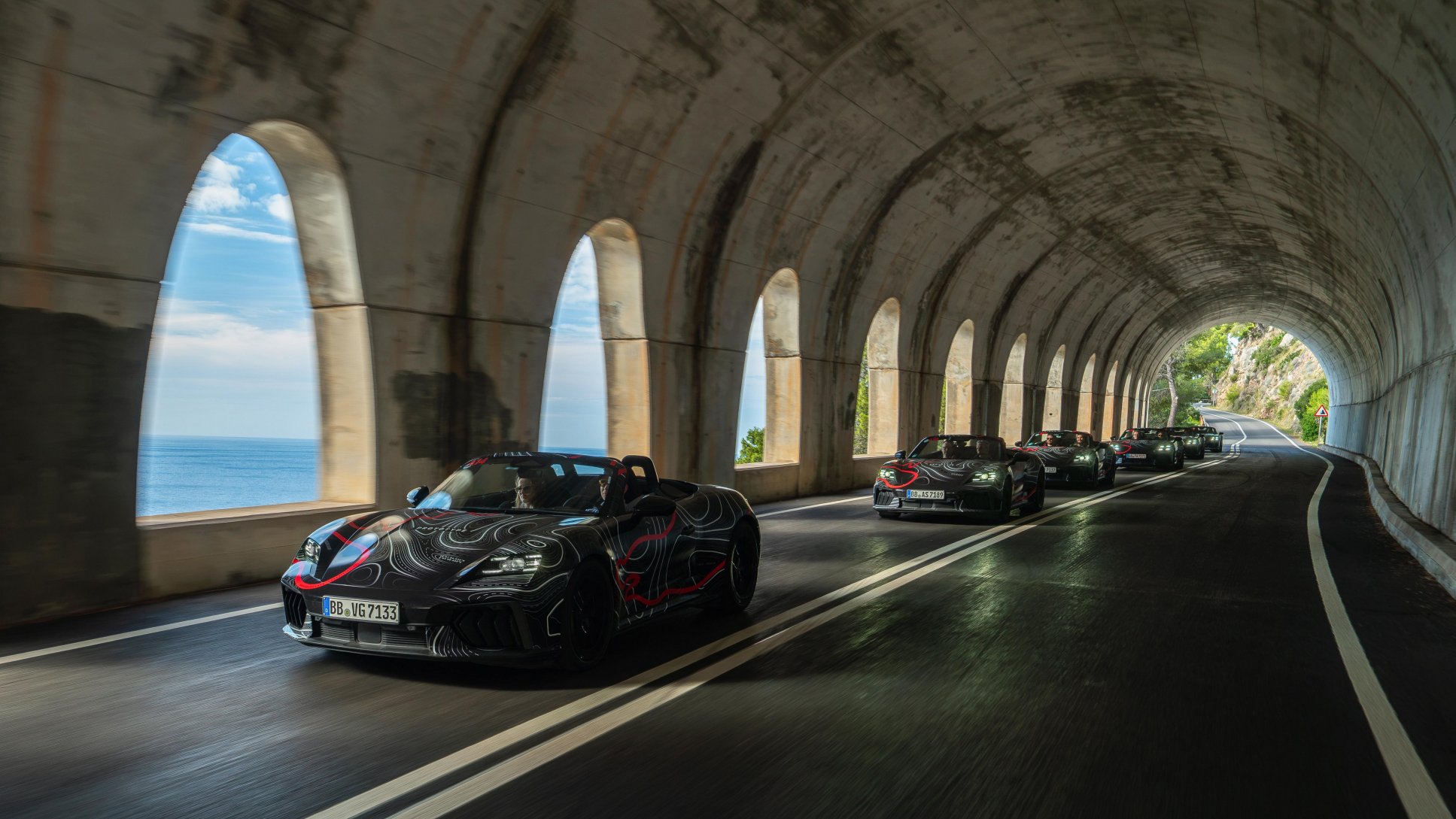 Cars4 days ago
Porsche’s Electric Boxster Puts the Battery Where the Engine Used to Be
-
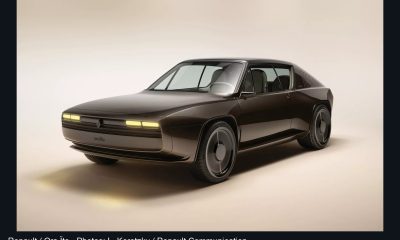
 Cars1 week ago
Ora Ïto Gives the Renault 17 a New Shape for an Electric Show Car
-
 Woodworking1 week ago
HygroShape Lets Flat-Packed Wood Find Its Furniture Form